
Royal Graveyard Bahawalpur State: History Carved in Stone
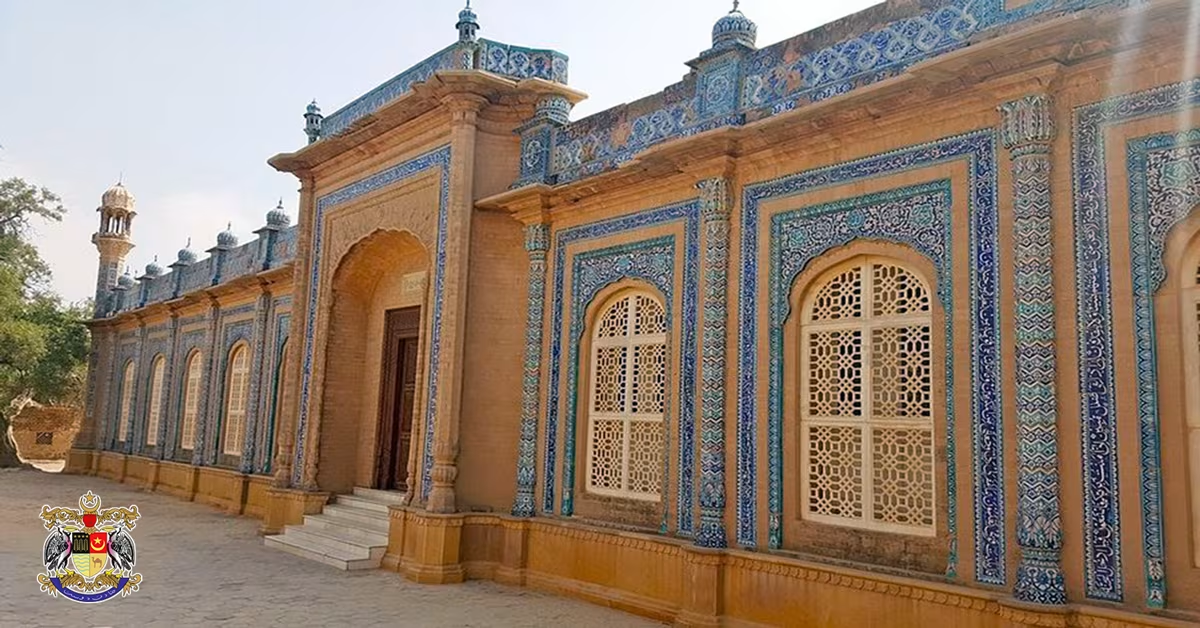
Explore the Derawar Royal Graveyard, the private necropolis of the Abbasi Nawabs near Derawar Fort, blending Islamic and local architecture, the love tale of Victoria Begum, and centuries of regal history.
Just a short walk from the formidable Derawar Fort, emerging dramatically from the shifting sands of the Cholistan Desert, lies the Derawar Royal Graveyard—the ultimate resting place of the Abbasi Nawabs of Bahawalpur. This secluded necropolis is more than a burial ground. It holds the remains of eight successive Nawabs, together with other members of their royal household, enclosed within a mausoleum complex that blends the refined traditions of early Muslim architecture with regional building arts.
The graveyard extends a silent invitation into past epochs: into tales of dynasty, desert survival, devotion, and design. Its architecture mirrors local craftsmanship—flat-roofed tombs etched with Seraiki and Sindhi motifs—juxtaposed against domed mausoleums adorned in blue-and-white glazed tiles, recalling the luxury of Islamic artistic heritage. The varying materials and styles beautifully reflect the multicultural ethos of the Bahawalpur state.
Origins & Strategic Relocation
By the late 18th century, the city of Bahawalpur was frequently under siege from Afghan Durrani incursions. In particular, in 1785, forces led by the Afghan commander Sirdar Khan ravaged the city, prompting Nawab Bahawal Khan II (reigned 1772–1809) to make a bold decision. He shifted the royal family’s burial site from Bahawalpur city to a more defensible location near Derawar Fort—approximately 500 yards distant, where the fort’s massive walls strengthened both symbol and sanctuary.
This strategic relocation was inaugurated when Nawab Bahawal Khan II buried his elder brother, Jindwada Abbasi, on that elevated ground. That act marked the graveyard’s transformation into the official royal necropolis, forever linked with the legacy of the Abbasi dynasty.
The move also reflects the political turbulence of the time: Bahawal Khan II not only defended his realm from external threat but also asserted sovereignty—the Durrani attacks had tested his control, yet his decisions reaffirmed the kingdom’s continuity. His reign was pivotal: in 1833, he secured autonomy under a treaty with the British East India Company, ensuring Bahawalpur’s distinct identity within the evolving geopolitics of the subcontinent.
✨ Why Royal Graveyard Matters?
This desert necropolis isn’t simply an architectural marvel—it carries the memory of rulers who shaped regional history through alliances, resilience, and cultural patronage. Its location near Derawar Fort signified strategic wisdom; its scale and style signal the dynasty’s pride. Together, they offer a living monument in stone to the endurance of the Abbasi Nawabs—and remind visitors of the fragile boundary between empire and legacy.
Royal Graveyard Architecture: Where Forms Meet Faith
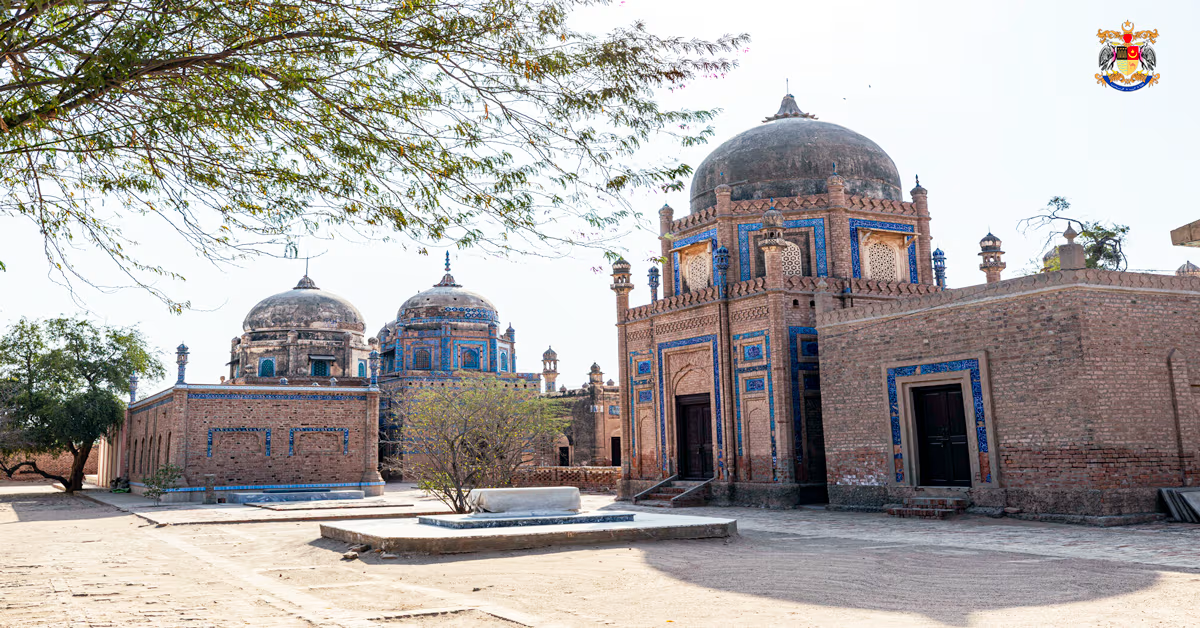
Dual Styles: Flat-Roofed Tombs vs. Domed Mausoleums
The Derawar Royal Graveyard is a masterful architectural synthesis — two contrasting styles that narrate centuries of cultural evolution. On one hand, simple flat-roofed tombs crafted from red brick or local materials reflect the region’s traditional building methods. These modest graves, often belonging to local or Abbasi family members, echo the vernacular architecture of southern Punjab and underline a grounded, regional identity.
In stark contrast stand the domed mausoleums, monumental in scale and imbued with regal gravitas. Inspired by Turko-Mughal and Ottoman aesthetics, these mausoleums rise above the sands, topped with elegant domes and octagonal facades. Totaling seven in number, they form a visually imposing cluster that signals power, sanctity, and spiritual ascent. The arrangement communicates a deliberate hierarchical architecture, where rulers are interred under lofty domes, while others rest beneath humble flat caps.
Tile & Ornament: A Symphony of Color and Calligraphy
The domed structures are draped in blue and white glazed tiles, creating a kaleidoscope of color under the desert sun. These tiles are anchored in Sindhi and Seraiki traditions, fusing intricate floral arabesques with flowing Qur’anic inscriptions, without any figural representation—true to Islamic artistic norms.
These patterns recall the glass-like tile panels found in the Multan and Sindh necropolises, adding rich texture to each mausoleum’s façade. Inside, the domes open into frescoed walls adorned with mirror and tile work, and wooden doors carved with traditional motifs—a blend of color, light, and symbolism that evokes spiritual transcendence.
Marble Elegance: Reminiscent of the Taj Mahal
Among the seven mausoleums, two stand apart in refined white marble—immediately reminiscent of miniature Taj Mahals in the Cholistan Desert. These mausoleums were built for foreign-born Begums, especially the British-born Victoria (Linda Florence), signifying their unique status within the royal household.
Their pristine surfaces gleam under sunlight, and their architecture features delicate marble screens, crisp domed roofs, and ornamented pillars. These structures assert architectural ambition; they visually and symbolically elevate the interred beyond mere regional identity, embracing a universal aesthetic of purity, love, and imperial grandeur.
📌 Why This Architectural Blend Matters
This architectural fusion is not merely aesthetic—it’s symbolic:
Regional Identity: The flat-roofed tombs anchor the necropolis in the cultural soil of southern Punjab.
Imperial Aspirations: The domed marble mausoleums reflect adaptation of Islamic royal architecture at the dawn of Bahawalpur’s apex.
Spiritual Complexity: Blue-white tiles, calligraphy, and domes evoke Islamic cosmology—heavenly blue skies and divine messages carved in stone.
Narrative of the Royals: From humble regional founders to cosmopolitan kings embracing global art, the architecture traces the evolution of the Abbasi dynasty.
Inside the Royal Graveyard Chamber
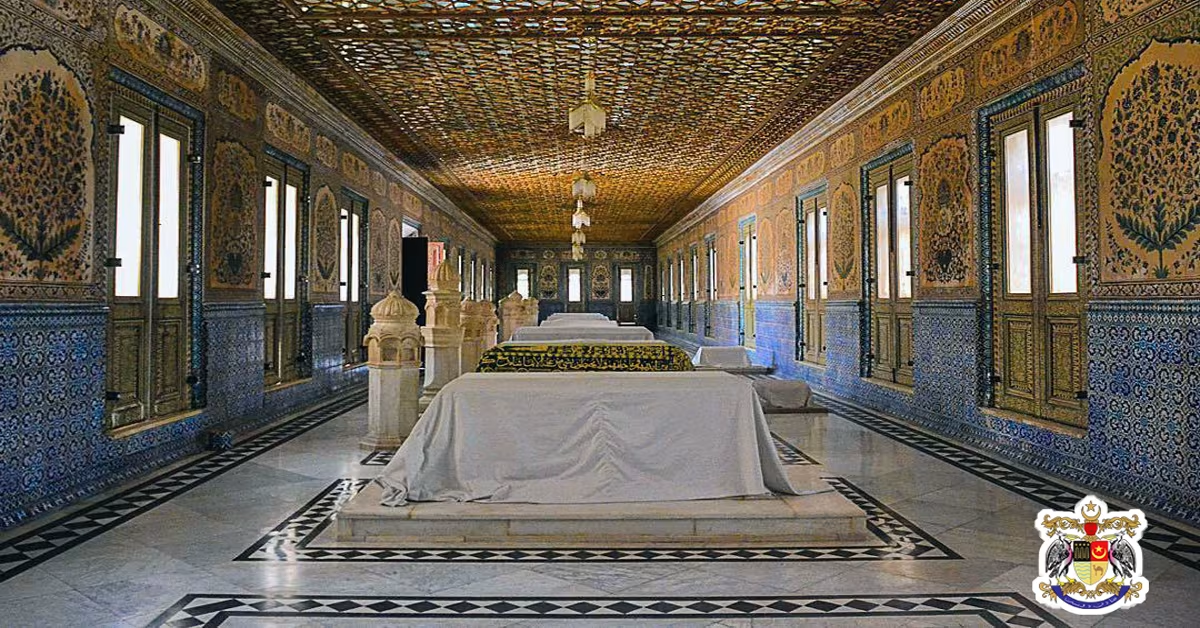
A rectangular hall at the center holds the graves of eight ruling Nawabs:
| Nawabs | Era |
| Bahawal Khan II | 1772–1809 |
| Sadiq Muhammad Khan II | 1809–1825 |
| Bahawal Khan III | 1825–1852 |
| Fateh Khan | 1853–1858 |
| Bahawal Khan IV | 1858–1866 |
| Sadiq Muhammad Khan IV | 1866–1899 |
| Bahawal Khan V | 1899–1907 |
| Sadiq Muhammad Khan V | 1907–1955, died 1966 |
Each tomb bears captions of life spans and tenure. The pillar size next to each grave symbolizes the ruler’s stature in the dynasty. Sir Sadiq Muhammad Khan-V, who acceded Bahawalpur to Pakistan in 1955, anchors the array with a prominent tomb.
A Tale of Love: Victoria Begum Linda Florence (Ghulam Fatima)
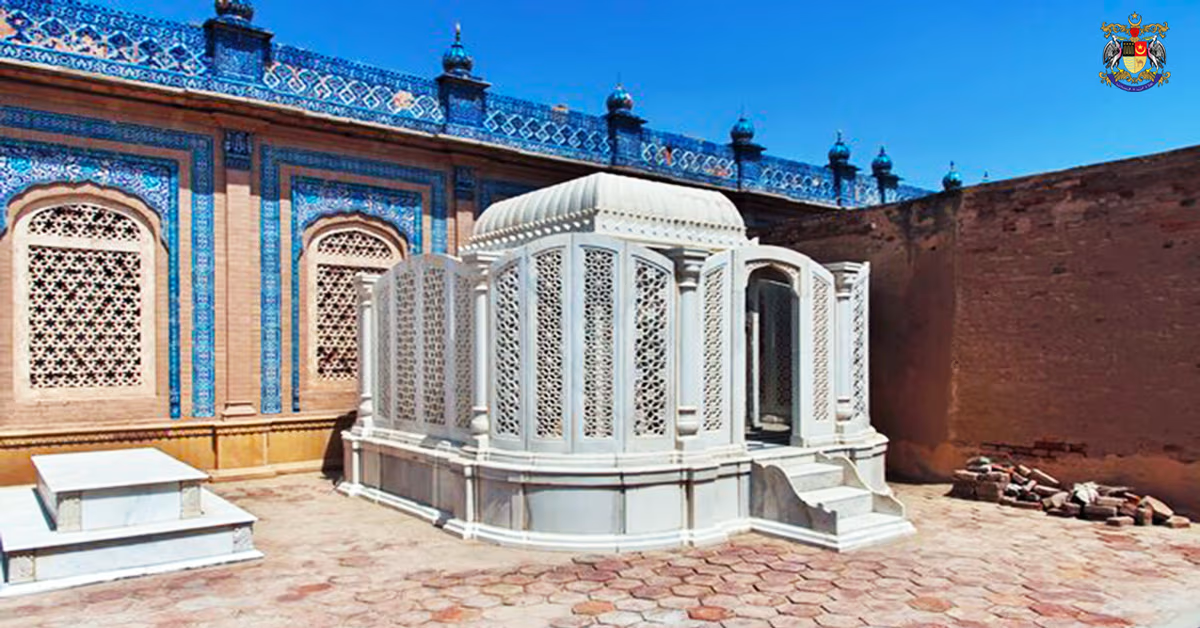
Within the sands of the Cholistan Desert lies one of the most poignant love stories of southern Punjab—a story embodied in marble and memory.
Linda Florence, originally from Hyderabad Deccan in British India, captivated the heart of Nawab Sadiq Muhammad Khan-V during a visit to Bombay in 1927. Following her conversion to Islam and adoption of the name Ghulam Fatima, she became known affectionately to the locals as Victoria Begum. She and the Nawab had four sons and a daughter before her untimely death just six years into marriage.
In accordance with her final wish, she was buried at the feet of Nawab Sahib’s tomb, symbolizing devotion and affinity even in death. Today, her smaller marble mausoleum stands directly before his tomb in the royal chamber—an intimate architectural testament to their shared legacy.
Her story echoes across generations: a cross-cultural romance sealed in faith and remembrance. Positioned near the majestic tomb of Sir Sadiq Khan-V, her resting place remains surrounded by delicate marble latticework—an embodiment of enduring love in stone.
Access & Custodianship: Sacred Privacy
🔐 Private Domain
The Derawar Royal Graveyard remains a private sanctuary, firmly under the stewardship of the Abbasi family. Public entry is not permitted; only direct descendants or individuals with special invitations can enter the enclosed grounds. Visitors report clustered rows of royal tombs and discrete courtyard mausoleums—visible only with permission.
🔑 Keys & Customs
Access is controlled by an ancient tradition: the iron key is held by a local custodian family, entrusted since the era of Nawab Bahawal Muhammad Khan II—a tradition passed down for nine continuous generations. Entry often hinges upon welcome by the community guardian or advance coordination.
Numerous accounts recount that visitors frequently must seek out the guard and may offer a nominal “gift money” to open the gates. Although unofficial, this custom facilitates access in a setting where formal tourism infrastructure is minimal.
Why This Matters?
These practices preserve the sacredness and integrity of the royal necropolis. They emphasize:
- The site’s status as private and spiritual, not a tourist attraction.
- The community-based custodianship, reflecting a blend of royal and local stewardship.
- The exclusive experience for those who respect traditions and negotiate access mindfully.
Surrounding Heritage: Derawar Fort & Abbasi Mosque
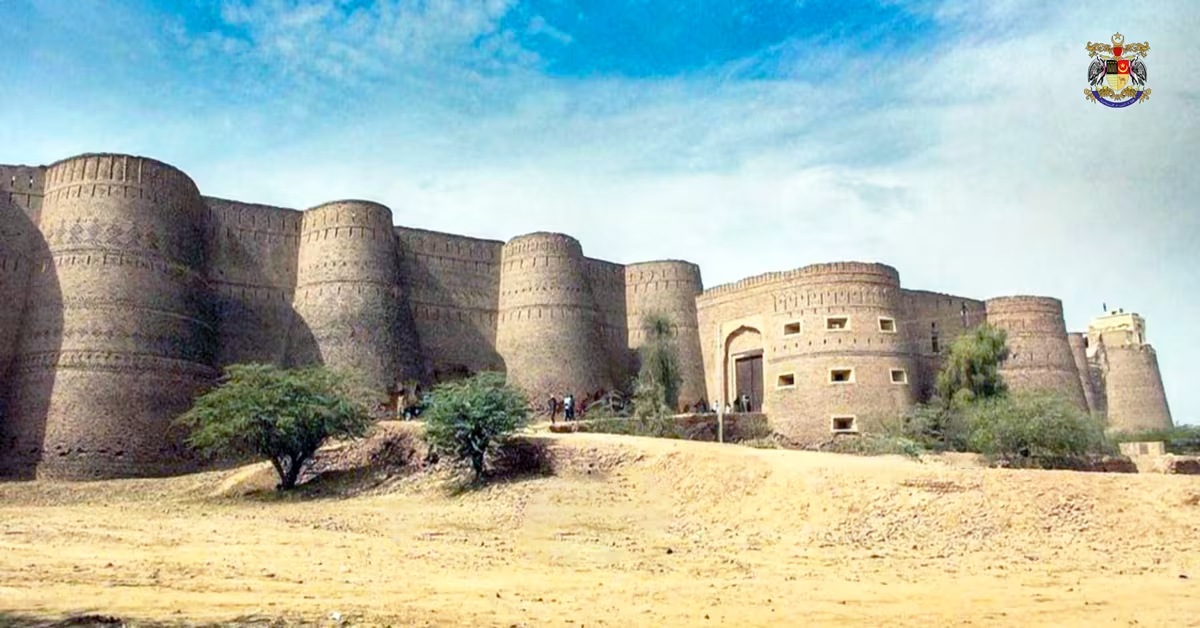
Derawar Fort: Desert Sentinel of Centuries
Rising starkly from the golden Cholistan Desert, Derawar Fort commands attention even from miles away. Originally constructed in 858 CE by Rai Jajja Bhati—a Rajput ruler of the Bhatti clan—as a tribute to Emperor Rawal Deoraj of Jaisalmer, it once bore the name Dera Rawal, evolving into Derawar over time. The modern fortress, however, took shape in 1732, when Nawab Sadiq Muhammad Khan of the Abbasi dynasty undertook a comprehensive renovation—transforming the older casbah into a monumental stronghold.
This square citadel encompasses approximately 1,500 meters in perimeter, with walls soaring to 30 meters high and five feet thick, punctuated by 40 towering circular bastions (10 per side). These bastions served defensive and symbolic roles, visible on the horizon, embodying both strength and architectural refinement.
Inside, traces of past grandeur emerge through remnants of frescoed halls, vaulted chambers, and ventilation channels that once kept summer quarters bearable. A labyrinth of underground passages and royal chambers still hint at the fort’s former role as a royal safe house.
Abbasi Mosque: The Marble Jewel of Derawar
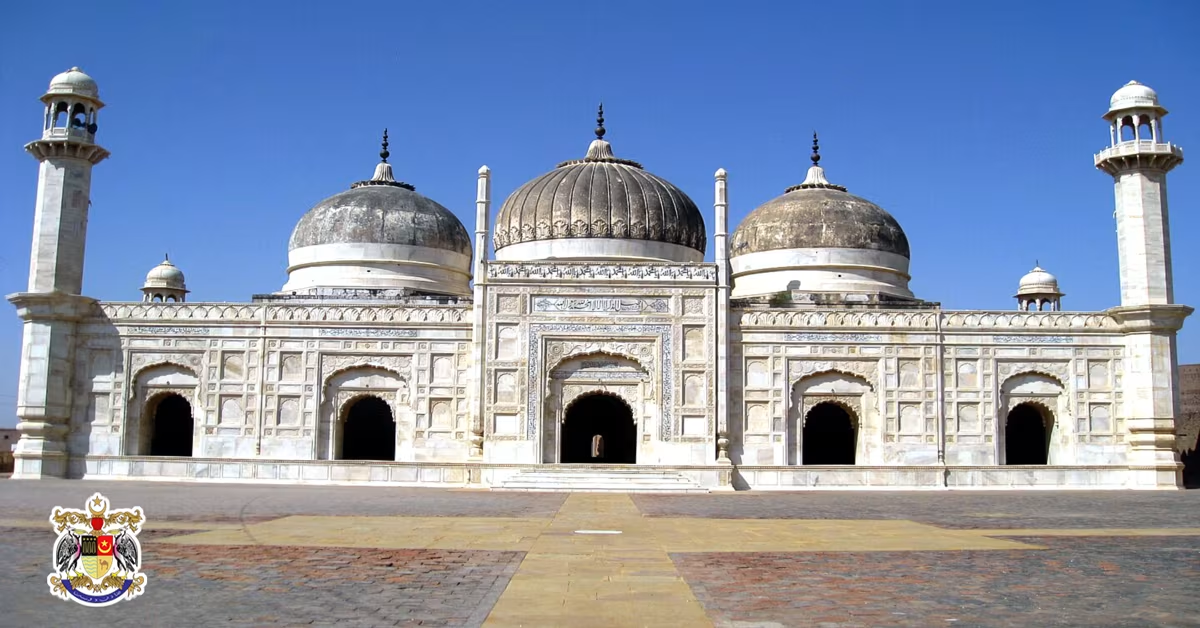
Just beyond the fort’s outer perimeter stands the Abbasi Mosque, also known as Jamia Masjid-e-Abbasi—a dazzling structure built around 1849 by Nawab Bahawal Khan IV. Modeled after Delhi’s famed Moti Masjid, this mosque is crafted entirely from polished white marble. Its pearl-like presence amidst the desert landscape earned it the nickname “the pearl of Cholistan.”
The mosque features three pearlescent domes and two octagonal minarets, framing a façade carved in elegant Qur’anic calligraphy. The structure encloses a large prayer hall and a courtyard that together can accommodate roughly 1,000 worshippers.
Its interior is magnificently proportioned, flooded with soft light through marble latticework and screens, while a marble jharoka (balcony) faces the fort, adding a layer of architectural drama and devotional grace.
Amid all of Derawar’s heritage, the mosque stands out as a symbol of the Abbasi Nawabs’ devotion to Islamic art and statecraft. Local guides report that it remains well-maintained by community caretakers, even as other parts of the fort show signs of neglect.
Visitor Tips & Impressions
🌟 Visitor Sentiment
Travel reviews consistently award the Derawar region a rating of 4.5 to 4.6 out of 5, reflecting deep admiration for the desert fort’s scale, the exquisite tilework of the royal graveyard, and the mosque’s serene white marble. Yet, many accounts highlight a key caveat: entry often requires negotiation—or sometimes a modest token—to access the private gravesite and fort interiors.
Local Advice for Travelers
- Best Times to Visit: Aim for early morning or late afternoon, when desert sunlight casts golden and blue hues across walls—ideal for photography and comfort.
- Footwear & Terrain: Paths are often uneven and sandy; sturdy shoes are strongly recommended.
- Code of Conduct: This is a place of historic and spiritual significance— maintain silence, and show respectful restraint while moving through the mausoleum or mosque.
- Supplies & Facilities: Basic amenities are scarce in the remote desert. Visitors should bring water, snacks, and shade gear.
- Guided Experience: Hiring a trusted local guide enhances understanding of the layered history—from Mughal influence to local Abbasi customs—and may help facilitate entry permissions.
Reflections & Purpose
Strolling through the Royal Chamber of the Derawar Royal Graveyard, a deep silence blankets the tombs of former rulers. Visitors often describe a moment of realization: “No matter how grand life was—our legacies rest here in dust; only our deeds matter.” This sentiment resonates repeatedly among travelers who share stories of introspection after witnessing the tombs in their quiet sanctity.
One review captures the essence perfectly:
“To live like a king is something… but this graveyard tells you it’s good to die like a king.” (dawn.com, wanderlog.com)
The architecture itself reinforces this message. A visitor recalled the vaulted hall adorned with mirrored ceilings and blue‑white tilework, illuminated softly through numerous windows—a setting powerful enough to prompt reflection on human impermanence.
These hushed corridors encourage contemplation of legacy: that kingdoms rise and tumble, but integrity and goodwill echo far beyond marble and mortar. Each tomb—especially the crowded royal hall—serves as a vignette of glory tempered by mortality.
Wrap Up: A Heritage Worth Preserving
The Derawar Royal Graveyard transcends the role of a simple cemetery. It is simultaneously:
- An architectural marvel—with glazed tilework, marble mausoleums, and domed edifices reflecting Islamic artistry.
- A historical archive—housing the remains of eight Nawabs along with their kin, each grave inscribed with family legacies.
- A spiritual retreat—a solemn sanctuary encouraging introspection and humility before time’s passage.
From the stories of power and loyalty to the timeless love of Victoria Begum, the site threads together narratives of governance, devotion, identity, and mortality.
For visitors and heritage enthusiasts alike, the royal cemetery offers an immersive encounter with South Asia’s regal past. Despite its seclusion and restricted access, it remains a hidden gem—one that deserves wider recognition and preservation.
The site’s private custodianship preserves its authenticity but also highlights a key challenge: the need for balanced conservation and respectful, regulated access. Its historical significance—woven into the broader fabric of the Cholistan desert and Nababi heritage—marks it as a candidate for international awareness and protection.
Conclusion: Preserving a Desert Testament to Legacy
The Derawar Royal Graveyard serves as more than a resting place—it is a living monument to the grandeur and humility of the Abbasi Nawabs, etched in marble, tile, and desert silence. From its proximity to Derawar Fort, to the serenity of its royal chamber, every aspect of this site transforms sand and stone into enduring narrative.
By housing eight Nawabs together with intimate mausoleums like that of Victoria Begum (Linda Florence), the site weaves stories of political prowess, cross‑cultural love, spiritual devotion, and architectural brilliance into a unified heritage canvas. As Dr. Zahra Akram Hashmi has described, it stands as a rare Islamic necropolis where leaders of a historic Muslim state are interred in one location—a living prism of early Muslim architecture blended harmoniously with local arts.
However, this treasure faces growing vulnerability. Despite its historical value and enduring appeal, the royal graveyard—and associated heritage structures like Derawar Fort and the Abbasi Mosque—lack formal protection and remain largely in the shadows of mainstream tourism. Experts argue that preserving such heritage is not merely ethical but essential for national identity, cultural pride, and even economic opportunity through heritage tourism.
Greater awareness, careful conservation efforts, and regulated access are urgently needed. The site’s combination of architectural finesse, historical depth, and spiritual poignancy makes it a clear candidate for international recognition and preservation. It is a tangible echo of South Asia’s regal past yearning to be heard.
Final Reflection
In the hush of the Royal Chamber, amidst hushed tombs and fading inscriptions, visitors invariably find themselves contemplating: All life’s grandeur ends in dust, but our virtues endure. The Derawar Royal Graveyard reminds us that royalty fades, but human narratives—woven of love, faith, and legacy—can stand the test of time.
Let us champion this hidden gem—not just as an architectural legacy of the Abbasi Nawabs, but as a beacon of cultural memory worthy of preservation, admiration, and reverence for generations to come.