
District Bahawalnagar: History, Population, and Places to Visit
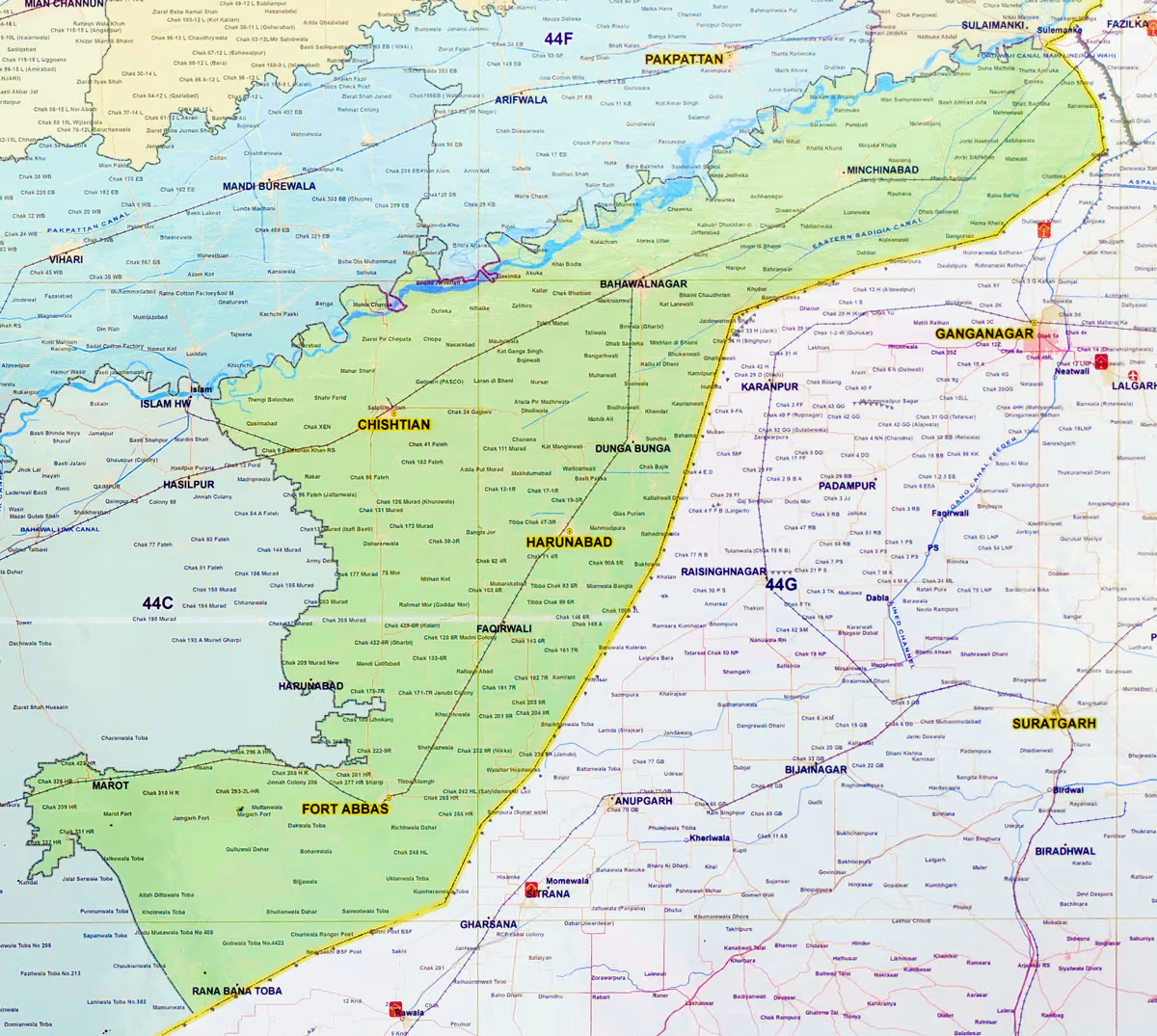
Map of District Bahawal Nagar
Discovering Punjab’s Historic District Bahawalnagar
Tucked gracefully along the sun-baked southeastern edge of Punjab, Pakistan, District Bahawal Nagar stands as a living canvas where history, culture, and breathtaking rural landscapes come together in perfect harmony. Here, golden fields ripple under gentle winds, timeworn forts whisper tales of Nawabs and warriors, and the air is often laced with soulful Sufi melodies drifting from ancient shrines.
Yet, despite its rich tapestry, Bahawalnagar remains one of Punjab’s best-kept secrets. Overshadowed by the grandeur of its illustrious neighbor Bahawalpur, this district patiently waits to reveal its treasures to those willing to wander off the beaten track. From the bustling markets of Chishtian echoing with local folklore to the tranquil villages where life moves to the slow rhythm of the harvest, Bahawalnagar offers an authentic glimpse into the heart of Punjab.
If you’re a history lover yearning to trace the footsteps of Nawabs, a culture seeker eager to experience vibrant Urs festivals, or simply an adventurer determined to explore Punjab beyond the usual tourist hubs, Bahawalnagar promises a journey that is both enlightening and soul-stirring.
In this detailed guide, we’ll journey through Bahawalnagar’s remarkable story—exploring its tehsil-wise population landscape in 2023, uncovering fascinating chapters of its past, delving into its robust agricultural economy, and highlighting the top places that make this district a hidden jewel of Punjab. By the end, you’ll see exactly why Bahawalnagar is more than just a name on the map—it’s a destination waiting to be experienced.
Where is Bahawal Nagar Located? Distance from Bahawalpur and Lahore
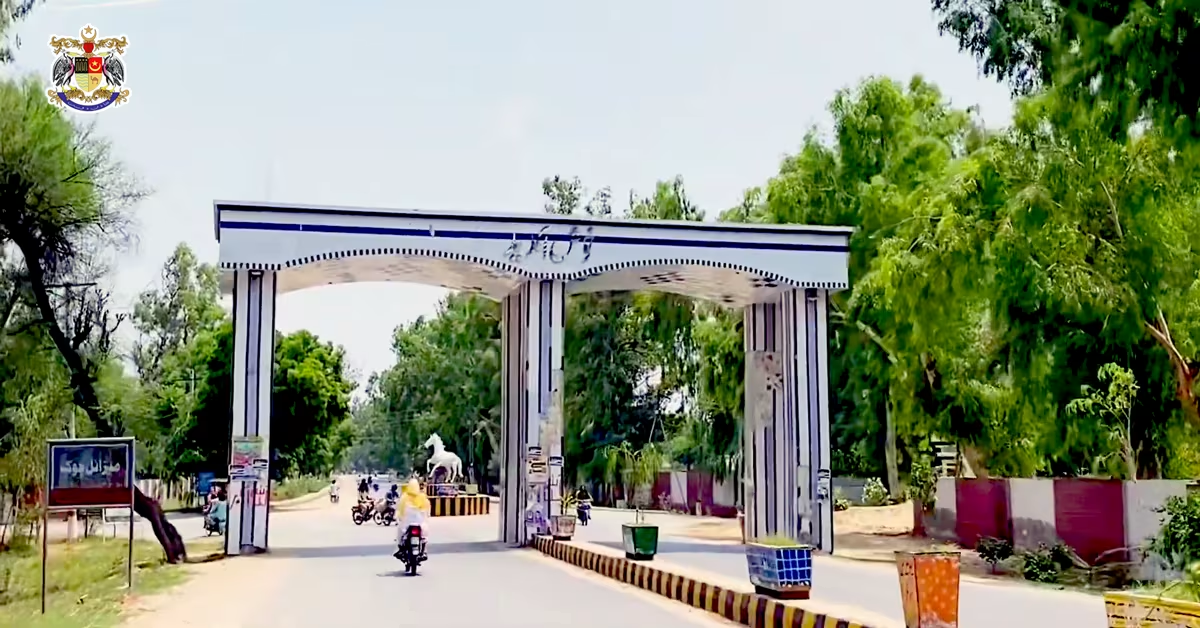
Perched gracefully on the southeastern edge of Punjab, Bahawalnagar District acts as a quiet sentinel along Pakistan’s frontier, sharing its eastern and southern borders with the vibrant deserts of India’s Rajasthan. This strategic placement has, for centuries, made Bahawalnagar a subtle crossroads of cultures, trade routes, and historic migrations.
From a traveler’s perspective, Bahawalnagar sits at comfortably reachable distances from major urban hubs:
- Just 175 kilometers east of Bahawalpur, the former princely capital adorned with palaces and museums.
- About 240 kilometers from the bustling trade and textile city of Multan, famed for its Sufi shrines and mango orchards.
- Roughly 285 kilometers south of Lahore, Punjab’s cultural heartbeat, known for its grand Mughal architecture and spirited street life.
What truly breathes life into Bahawalnagar’s landscape is the mighty Sutlej River, which draws a natural line across the district’s northern boundary. From this river extends a lifeline of canals—like the Fordwah and Eastern Sadiqia—that spread across the land like delicate green veins. These waterways work their magic on otherwise arid plains, transforming them into lush fields teeming with wheat, cotton, sugarcane, and vibrant orchards.
Covering an impressive area of approximately 8,878 square kilometers, Bahawalnagar is not only geographically vast but also holds immense significance as one of Punjab’s leading agricultural zones. It’s a land where fertile soil meets centuries-old traditions, creating a tapestry of life that stretches far beyond what first meets the eye.
Historical Background of Bahawal Nagar – From Rojhanwali to a Thriving District
Early History: The Land of Sufis, Caravans & Sand Dunes
Long before modern borders carved up the subcontinent, the land that is today called Bahawal Nagar was a quiet stretch of plains and shifting sand dunes, dotted with modest settlements. It lay strategically on the old caravan routes that threaded their way between Multan, Delhi, and the Rajput kingdoms of Rajasthan, making it a natural waypoint for traders, wanderers, and mystics alike.
At its heart was a small, unassuming village known as Rojanwali, sometimes also referred to as Ubbha. Simple mud homes clustered near water channels, camel caravans plodded along dusty trails, and the air often echoed with the chants of Sufi fakirs who traveled from one settlement to another, spreading messages of love and unity. Even then, the seeds of Bahawalnagar’s spiritual and economic significance were quietly being sown.
Bahawalpur State & the Nawabi Legacy
As the sands of time moved into the 18th and 19th centuries, this tranquil region became an integral part of the flourishing Bahawalpur State, ruled by the illustrious Abbasi Nawabs. These visionary rulers were not only patrons of grand architecture and culture but also pioneers of development in their territories.
Under their watchful governance, vast tracts of barren land began to transform. The Nawabs spearheaded the construction of intricate canal systems, encouraging farmers to settle here and cultivate the fertile plains fed by the Sutlej. Administrative centers took root, caravan trade flourished, and little Rojanwali started finding its place on regional maps.
A pivotal moment came in 1904, during the era of the British Raj. The colonial rulers, recognizing the region’s strategic location, extended the railway line from Bahawalpur to Bhatinda (now across the border in India). With this new iron lifeline humming across the fields, Rojanwali was elevated from a sleepy village to a significant rail town, reborn under a new name: Bahawal Nagar, in honor of Nawab Bahawal Khan V.
Almost overnight, the Bahawal Nagar Railway Station turned into a bustling hub. Caravans of the past were replaced by trains laden with cotton bales, sacks of wheat, mustard seeds, and even livestock, bound for markets far beyond Punjab. Traders, merchants, and craftsmen flocked to the growing town, giving it a new economic pulse.
Post-Partition Growth of District Bahawal Nagar
The creation of Pakistan in 1947 brought with it seismic changes, and Bahawalnagar was no exception. As borders were redrawn and millions embarked on arduous migrations, this district became a new home for countless families crossing over from India. They arrived not just with hopes for a safer future but also carried their skills, rich traditions, culinary flavors, and centuries-old crafts, breathing new life into Bahawalnagar’s social fabric.
Over the ensuing decades, Bahawalnagar matured from a modest railway town into a thriving district, comprising five vibrant administrative tehsils—each with its distinct dialects, folk songs, festivals, and bustling bazaars. Fields of wheat and cotton replaced many old scrublands, while Sufi shrines continued to draw devotees, keeping alive the district’s spiritual heart.
Today, the story of Bahawalnagar is more than just history—it’s a living testament to resilience, adaptation, and the beautiful interweaving of diverse cultures that settled here over centuries. It stands proudly as a district that remembers its humble beginnings in Rojanwali while embracing its dynamic future.
Population of Bahawal Nagar District 2023 Census (Tehsil-wise)
When people look up Bahawal Nagar today, one of the most common questions that pops up is:
“What is the population of Bahawal Nagar District in 2023 Census, broken down by tehsil?”
And it’s no surprise why—population statistics tell a powerful story about any region’s growth, vibrancy, and future potential. According to the latest 2023 Pakistan Census, Bahawalnagar District has emerged as one of Punjab’s most densely inhabited regions, reflecting its steady progress and vital role as an agricultural hub. Here’s how the numbers break down across its five tehsils:
| Tehsil | Population (2023) |
| Bahawalnagar | 976,049 |
| Chishtian | 845,439 |
| Fort Abbas | 510,253 |
| Haroonabad | 615,476 |
| Minchinabad | 603,125 |
| ➡ Total Population | 3,550,342 |
That means over 3.5 million people call Bahawalnagar home, making it a lively district teeming with life. Roughly 27% of these residents live in urban centers, bustling through markets, schools, clinics, and administrative offices. But it’s the vast majority—about 73%—who reside in rural areas, weaving their lives around fields of ripening wheat, vibrant mustard blossoms, and endless cotton stretches.
This heavy rural composition is not just a statistic; it’s the heartbeat of Bahawalnagar. It underlines how deeply the district’s economy, lifestyle, and cultural rhythms are tied to agriculture. From sun-up to sundown, life here often dances to the cycles of sowing and harvest, with seasonal festivals and local fairs adding colorful interludes to the routine.
So whether you’re exploring Bahawalnagar to understand its economic potential, study its rural development, or simply connect with its down-to-earth communities, these population figures offer a compelling backdrop to appreciate how vast and diverse this district truly is.
Bahawalnagar Demographics: Languages, Literacy, and Culture
Mother Tongue:
Punjabi: ~94%
Urdu: ~3.4%
Saraiki: ~1.7%
Literacy Rate:
Overall: ~57%
Male: ~63.6%
Female: ~49.9%
This shows a gender gap, common across rural Punjab, though recent educational initiatives are steadily improving female literacy.
Bahawal Nagar Economy: The Agriculture Powerhouse of Punjab
Ever wondered why Bahawalnagar is often called the breadbasket of southeastern Punjab? The answer lies in its fields—endless, emerald waves of crops swaying gently under the sun, fed by a lifeline of canals branching from the mighty Sutlej River. Agriculture isn’t just an occupation here; it’s a way of life that shapes everything from family traditions to local festivals.
In fact, more than half of Bahawalnagar’s entire workforce finds its livelihood rooted in the soil. You’ll see it vividly if you ever drive through its countryside: farmers guiding tractors through neat rows of wheat, women and children helping sort freshly picked cotton, and donkey carts loaded with sugarcane making their slow procession to local mills.
Major Crops: Feeding Punjab and Beyond
Bahawalnagar’s vast agricultural patchwork supports a dazzling array of crops:
Cash crops like cotton, sugarcane, and rice dominate the landscape, spinning out into bustling ginning factories and rice mills that process these raw treasures for markets across Pakistan.
Staples such as wheat, maize, and barley are the lifeline of local diets and a steady source of income, with golden fields stretching as far as the eye can see during harvest season.
Oilseeds like mustard and sunflower turn the countryside into brilliant tapestries of yellow, attracting photographers and bees alike.
Bahawal Nagar's Orchard Rows & Vegetable Bounty
But it’s not just about grains. Bahawalnagar also bursts with:
- Fruit orchards, heavy with citrus, guava, and mango—delivering sweet, juicy flavors to tables from Lahore to Karachi.
- Vegetable farms that roll out vast harvests of carrots, onions, potatoes, tomatoes, and cauliflower, feeding not only Punjab but neighboring provinces as well.
On early mornings, local markets come alive with vendors’ colorful displays, baskets overflowing with fresh produce that carries the district’s earthy aroma.
Small-Scale Industries in Bahawal Nagar: Where Fields Meet Factories
The district’s robust agriculture doesn’t stop at the farm gate. It fuels a network of small industries that process, package, and add value to these raw goods:
Cotton ginning factories and oil extraction units that keep the textile and cooking oil sectors humming.
Rice mills and flour mills that ensure a steady supply of staples to homes far beyond Bahawalnagar.
Soap and detergent manufacturing, alongside tea blending units and small engineering workshops, diversify the local economy, providing crucial non-farm employment and supporting thousands of families.
A Vital Pillar in Punjab’s Economy
This seamless blend of agriculture and cottage-scale industry makes Bahawalnagar a silent powerhouse in Punjab’s economic engine. It doesn’t boast mega factories or sprawling IT parks, but its fertile fields and busy small workshops sustain livelihoods and drive growth that keeps Punjab—and much of Pakistan—fed and supplied.
So whether it’s the fluffy cotton in your shirt, the golden wheat in your bread, or the tangy citrus on your table, there’s a good chance it began its journey right here, in the sun-soaked heartlands of Bahawalnagar.
Best Places to Visit in Bahawalnagar
Fort Abbas & Desert Edge
Fortabbas Located in the southern reaches of Bahawalnagar District, Fort Abbas once served as a critical frontier post of the historic Bahawalpur State. Originally known as Pholra, it was renamed in 1927 by Nawab Sir Sadiq in honor of his eldest son, Muhammad Abbas. Built as a modest fortification, it guarded important trade and migration routes edging into the Cholistan Desert, which extends across southern Punjab. Though the original fort structure has largely vanished due to desert erosion and neglect, the town continues to bear the legacy of its strategic past, serving today as the administrative seat of Fort Abbas Tehsil.
Surrounding Fort Abbas lies a panoramic stretch of sand dunes, marking the northern edge of the vast Cholistan Desert. This border region is dotted with semi-nomadic settlements, where camel herders and pastoral communities sustain a centuries-old desert lifestyle. Travelers often find themselves immersed in scenes of undulating sands, low thorny scrub, and camel caravans weaving through the dunes—a photographer’s dream and a culturally rich experience. The contrast between the fertile fields north of Fort Abbas and the stark desert south speaks volumes about this unique geographic transition—one where timeless traditions meet expansive wilderness.
How Many Forts Are There in Bahawalnagar District?
According to archaeological surveys and local heritage sources, the Punjab Department of Archaeology identified thirteen forts within the Bahawalpur and Bahawalnagar Cholistan regions for preservation—suggesting that at least 13 historic fort sites lie within Bahawalnagar’s territory. While many have fallen into ruin, the key extant forts within Bahawalnagar District include:
1. Mir Garh Fort (Meergarh Fort) — Located ~9–15 km west of Fort Abbas. Built in the late 1700s, its mud-brick walls still stand at ~28 ft tall.
2. Marot Fort — Situated near the border in Fort Abbas Tehsil, this fort once stood proudly along the Ghaggar (Hakra) River. Today its remnants reflect its former grandeur.
3. Moj Garh Fort (Mauj Garh) — Built in 1743 AD in the Cholistan desert along the Yazman–Fort Abbas road, parts of its glazed tiles and brick structure remain. It’s one of the stronger surviving desert forts.
4. Jam Garh Fort — Located ~9 km from Mir Garh Fort, Jam Garh is among the chain of caravan-road forts built by Abbasi rulers in the late 18th century.
5. Phulra / Fort Abbas (also known as Pholra) — An earlier Sikh-built fort later renovated by Nawab Muhammad Mubarak Khan III and renamed Fort Abbas; still present as a ruin on the old Hakra route.
6. Din Garh Fort — A lesser-known abbey fort in Bahawalnagar’s Cholistan desert, included in the survey list of 13 forts.
7. Khairgarh Fort — Another desert fort built in the late 18th century with mud-brick construction, now mostly eroded, but part of the same fort network.
8. Nawan Kot Fort — Mud‑brick fortress about 55 km from Derawar, preserving several original elements including towered bastions; included in survey list.
9. Bijnot Fort — A ruined Rajput-era fort near the border within Bahawalnagar’s desert region (though officially mapped under Bahawalpur District, the desert zone overlaps into Bahawalnagar.
Summary Table of Forts in the Region
| Fort Name | Location (Tehsil/Region) | Status |
| Mir Garh Fort | Fort Abbas / Cholistan | Ruined (walls remain) |
| Marot Fort | Fort Abbas near India border | Partially ruined, visible walls |
| Moj Garh Fort | Cholistan (Thandi Khoi region) | Partial ruins, half structure intact |
| Jam Garh Fort | Cholistan (near Mir Garh) | Ruins identified by survey |
| Phulra / Fort Abbas | Fort Abbas Tehsil | Ruined Sikh fort turned Nawabi |
| Din Garh Fort | Desert area in Bahawalnagar | Included in surveyed heritage list |
| Khairgarh Fort | Bahawalnagar desert zone | Mud-brick ruins |
| Nawan Kot Fort | Desert (~55 km from Derawar) | Partial remains |
| Bijnot Fort | Near border (Cholistan region) | Rajput-era ruins |
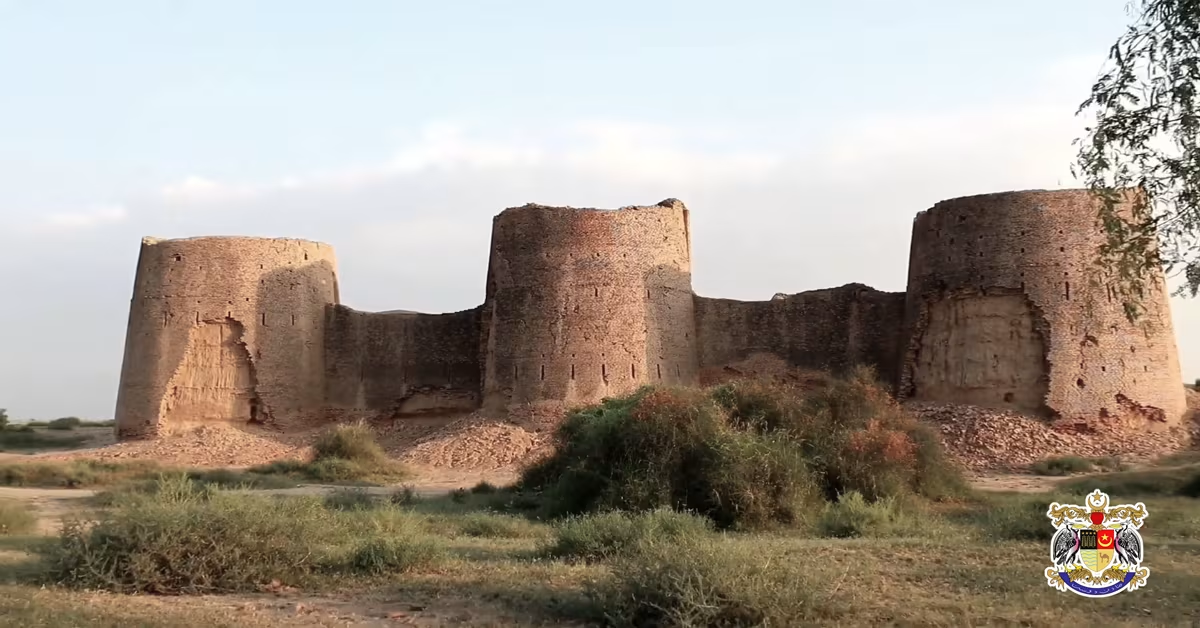
Mir Garh Fort (Fortabbas) District Bahawal Nagar
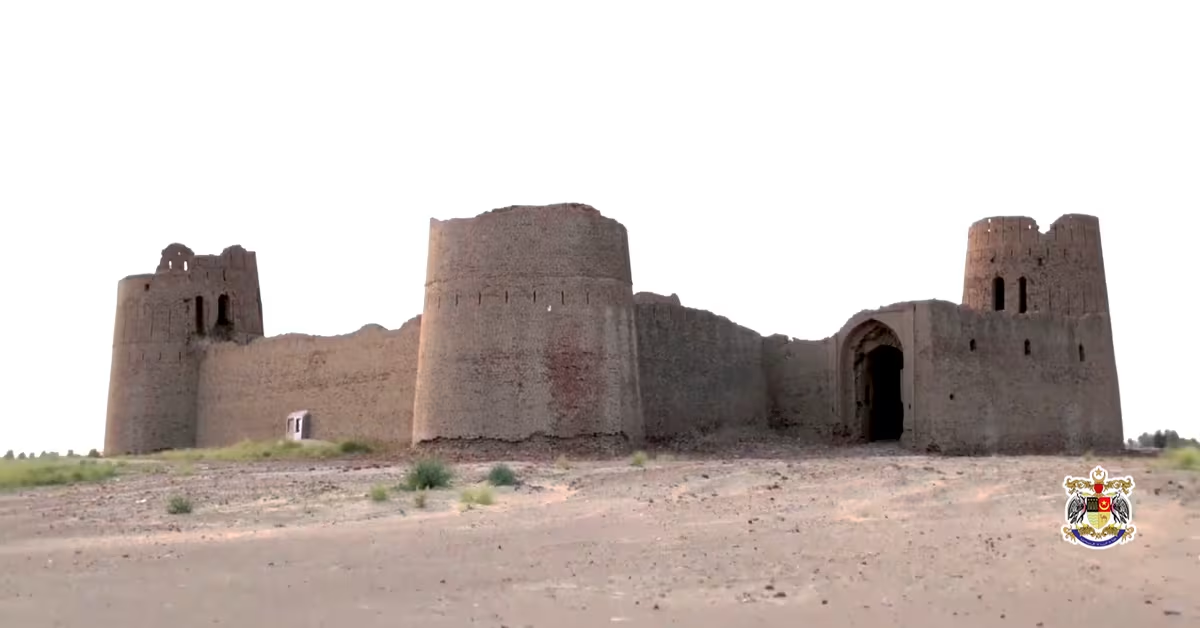
Jam Garh Fort (Fortabbas) Bahawal Nagar
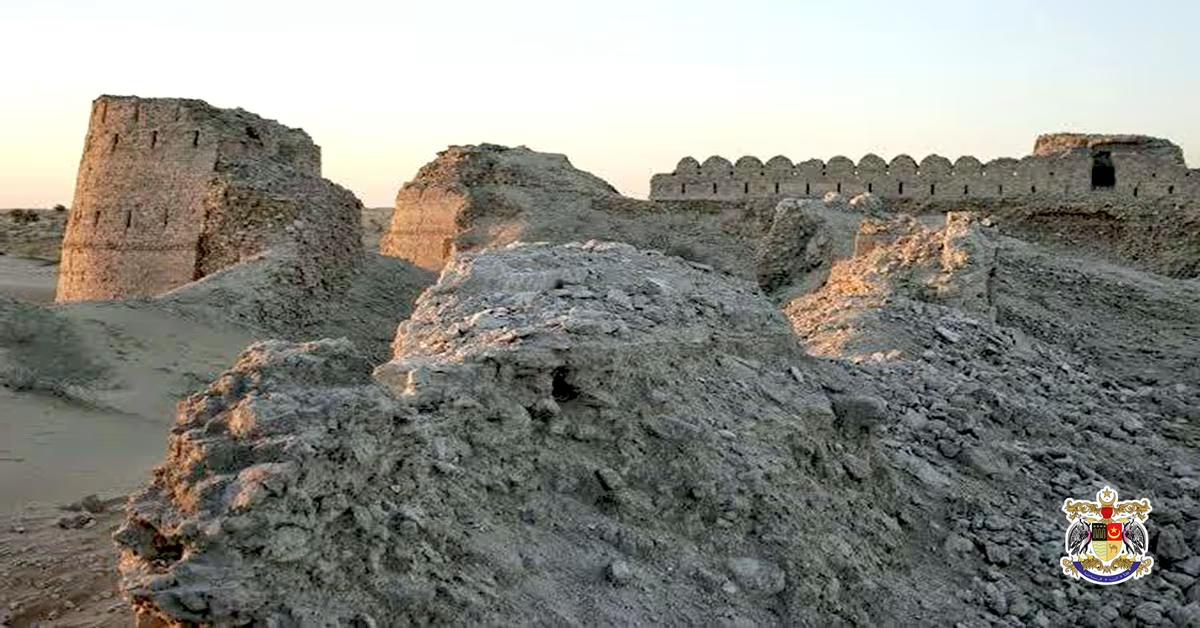
Bijnot fort a Rajput-era (Fortabbas) Bahawal Nagar near the border
Bahawalnagar Railway Station
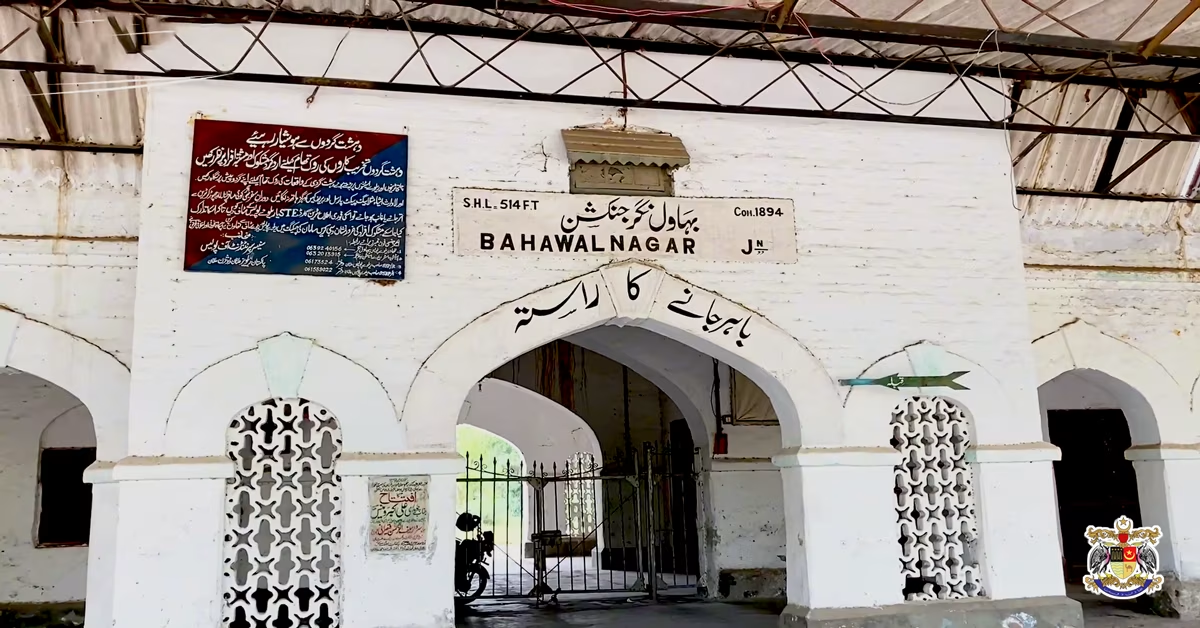
Bahawalnagar Junction Railway Station, originally established in 1894 as Rojhanwali Station, stands proudly on Eid Gah Road in Bahawalnagar city (postcode 62300). It was renamed around 1901 by Nawab Bahawal Khan V, in recognition of the town’s rising prominence within the Bahawalpur State.
Engineering Marvel from the British Raj
At its height, the station served as a critical junction linking Samasata, Amrooka, Fort Abbas, and further routes towards Karachi, Delhi, and Quetta—operating under the Darbar State Railway network and later the North Western Railways. The once-bustling junction even served as a key transfer point during the 1947 migration, carrying staff and materials between India and Pakistan.
Heritage Infrastructure & Layout
Built with Victorian-era colonial design sensibilities, the station once featured:
- Broad platforms and arched verandahs
- An overhead footbridge unique for its era
- Its own diesel-powered DC electricity substation, supplying power to the station and staff colony
- A locomotive workshop, hospital, police quarters, dak bungalow, playground, club, and cemetery—all forming a self-sufficient railway colony housing hundreds of staff and their families.
By 1935–38, over 500 staff quarters and administrative buildings lined the premises, turning the junction into a thriving mini-town.
Transition: From Bustling Hub to Quiet Heritage Site
Once heralded as one of the Subcontinent’s key railway intersections, the station handled express and freight trains around the clock. Routes included Karachi‑Delhi via Bhatinda and Amrooka, and special freight services even from Quetta to Delhi.
However, by 26 July 2011, tracks on the Samasata–Amrooka and Bahawalnagar–Fort Abbas lines were suspended, effectively halting all train services through the station. Today, the station stands largely abandoned, its infrastructure neglected—a lingering monument to unfulfilled potential. Reports describe the site as dilapidated, with theft of railway assets and occupation of railway quarters adding to its state of decay.
Bahawalnagar Railway Station: A Symbol of Past Glory
Despite decades of neglect, Bahawalnagar Junction remains a potent symbol of colonial-era engineering and regional prosperity. Amid dilapidation, community voices have called for its restoration—some proposing its conversion into a museum, heritage site, or town hall to preserve its legacy.
As described by rail history buffs and local observers, the station is “one of the oldest railway junctions in Pakistan,” once serving as a lively transit corridor and now a quiet canvas for reflection.
The story of Bahawalnagar Junction is not just railway trivia—it illustrates how local economies and regional identities once flourished along colonial infrastructure. Today, it’s a poignant reminder of lost glory and potential revival. For historians, urban explorers, and cultural heritage advocates alike, this station offers a rare window into a bygone era of South Asian rail transport.
Satluj Park & Bahawalnagar Zoo
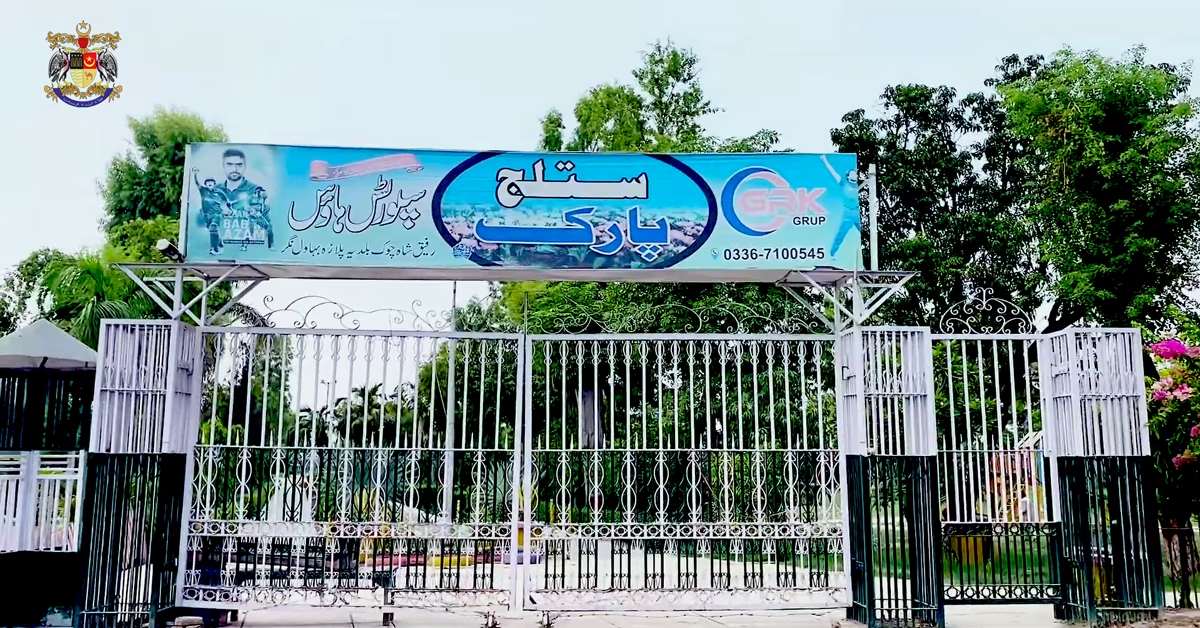
Satluj Park, nestled in the heart of Bahawalnagar city (Choughta Arain area), is a welcoming oasis celebrated for its lush greenery, winding walkways, and shaded benches—making it a favorite destination for families and morning walkers alike. Spanning several acres, the park features playground rides for children, well-trimmed lawns, and a peaceful atmosphere that offers a welcome break from city life. Open daily from early morning until evening, locals often head here to unwind with snacks from nearby vendors, enjoy leisurely strolls, or let their kids play outside while the sun sets over towering trees.
Just a short distance away lies the Bahawalnagar Wildlife Park (locally referred to as the zoo), a compact but well-maintained facility managed by the Punjab Wildlife & Parks Department. While modest in scale, the zoo is designed for family entertainment and education. It houses a variety of animals—such as blackbuck, ostriches, peafowl, langurs, and rhesus macaques—in carefully landscaped enclosures. The park also provides basic amenities like play areas and snack stalls designed to enhance children’s visits, making it a cozy spot for a pleasant afternoon outing.
Satluj Park opens its gates daily from about 5:00 AM to 8:00 PM, offering a peaceful and spacious environment right in the heart of Bahawalnagar city. Local check-ins suggest it’s a well‑loved spot for early joggers, families enjoying afternoon strolls, or kids on simple swing rides. It’s easily accessible by any local transport or a short walk from nearby neighborhoods.
Just a short drive away is the Bahawalnagar Wildlife Park, commonly known as the zoo. Its daily opening hours are 8:00 AM to 6:00 PM. It is a family-friendly destination ideal for young children. Managed by the Punjab Wildlife & Parks Department, the park features enclosures housing animals like blackbuck, ostriches, peafowl, langurs, and rhesus macaques, along with a few landscaped picnic areas and casual snack stalls for families to unwind in nature’s lap. While specific ticketing costs are not publicly listed, it is typically modestly priced since it operates under government jurisdiction.
Chishtian Sharif – Roza Taj Sarwar
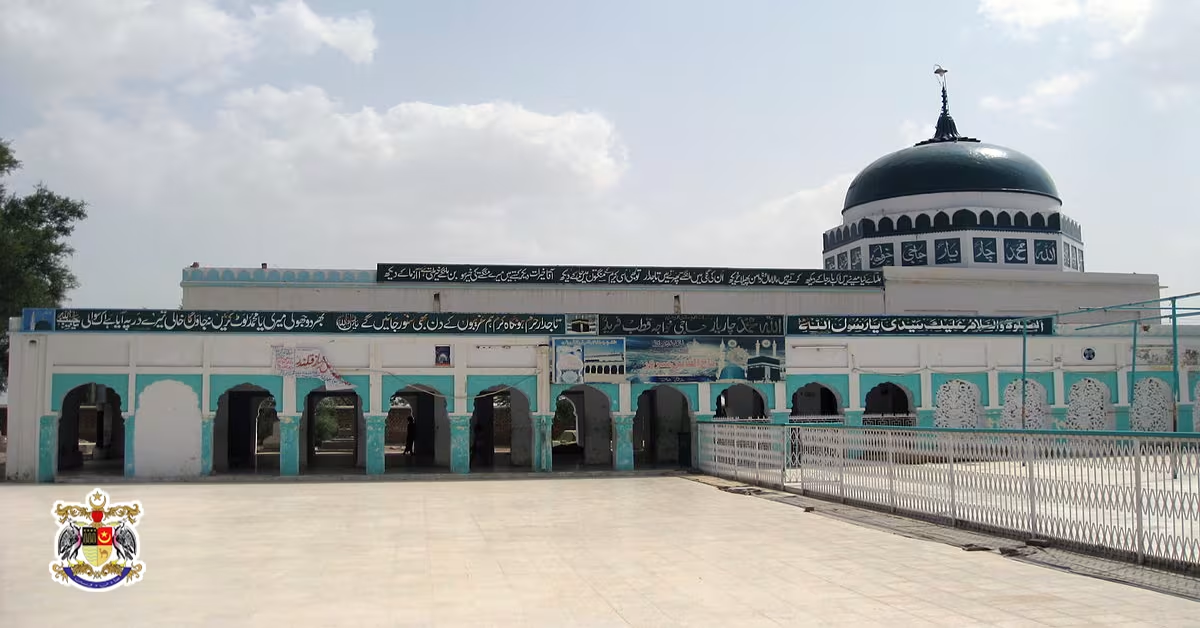
Shrine of Taj Sarwar Chishti R.A (Chishtian) District Bahawal Nagar
Chishtian Sharif, often affectionately called the “City of Love” or “Shehr‑e‑Muhabbat”, traces its spiritual roots to Taj Sarwar Chishti, a revered Sufi saint from the illustrious Chishti Order. Historical accounts note that he was the grandson of Fariduddin Ganjshakar of Pakpattan and that he founded the settlement of Chishtian around 1265 CE (574 Hijri). With devoted missionary work, he inspired many local tribes in the Punjab region to embrace Islam, ultimately achieving martyrdom in the process. The town’s name—Chishtian—is a tribute to his legacy, with his shrine, Roza Taj Sarwar, standing at its heart as a beacon of spiritual solace.
Every year, Roza Taj Sarwar becomes the focal point of an emotionally rich Urs festival, drawing thousands of pilgrims from across Pakistan seeking spiritual blessings. The ritual gatherings typically feature devotional prayers, night-long qawwalis, and communal meals in the spirit of Sufi tradition. Although the precise lunar-date for the Urs isn’t publicly documented, local devotees follow the Hijri calendar and adhere to moon-sighting practices to determine its exact timing. Whether attending the ceremony or visiting during quieter months, pilgrims and visitors are often moved by the shrine’s serene aura—a testament to centuries of devotion and reflection.
Hazrat Khawaja Noor Muhammad Maharvi (Qibla Alam)
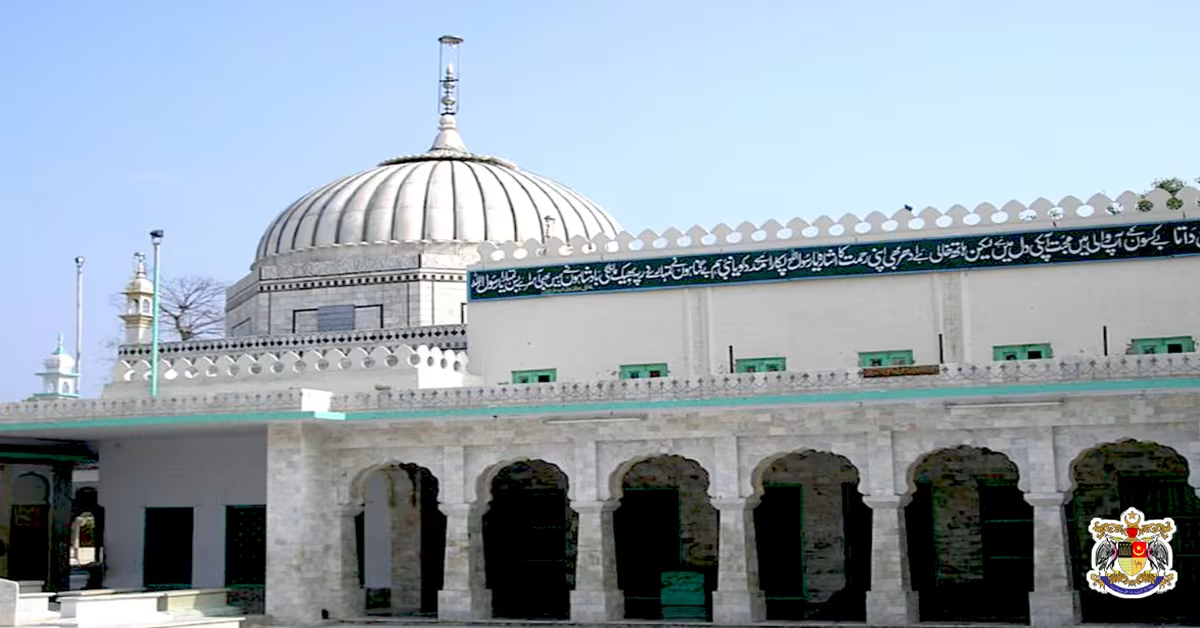
Shrine of Hazrat Khawaja Noor Muhammad Moharvi R.A
Born in Chhotala village of Chishtian (near Bahawalnagar) on 2 April 1730 (2 April 1746, according to alternate records), Hazrat Noor Muhammad Maharvi, affectionately titled Bahbal early in life, was a revered Sufi saint of the Chishti Order known by the honorific Qibla Alam—the spiritual axis of his time. He pledged allegiance to Maulana Fakhruddin of Delhi in 1752, becoming the 15th spiritual successor in the venerable line of Baba Farid. Over decades, he traveled tirelessly—often on foot—from Mahar Sharif to Pakpattan, Multan, Dera Ghazi Khan, and Lahore, spreading the teachings of Chishtiya mysticism with humility and devotion.
His legacy is deeply woven into Punjab and Sindh’s religious landscape. Revered both by Amir Bahawal Khan Abbasi II, ruler of Bahawalpur, and the esteemed Sufi poet Ghulam Fareed, Noor Muhammad’s influence extended to tribal conversions and spiritual reform across the region. With over 40 disciples—including Suleman Taunsvi of Taunsa Sharif—his khanqah in Mahar Sharif evolved into a vibrant center of learning, spawning affiliated Sufi establishments across Punjab, Sindh, and even abroad.
Shrine & Teachings of Khwaja-Noor-Muhammad-Maharvi-R.A
The revered dargah of Noor Muhammad Maharvi, located in Chishtian Sharif, was constructed soon after his passing on 3 August 1791 (3 Zil-Hijjah), following his wish to be buried in the town founded by his spiritual predecessor Baba Taj Sarwar. His shrine—comprising a majestic dome, prayer courtyard, and pilgrims’ shelters—was lovingly developed by disciples such as Muhammad Aqil and Jamal Multani, and remains a central hub of spiritual activity during his annual Urs from the 1st to 3rd of Zil-Hijjah.
Maharvi’s teachings prioritized steadfast faith, deep love for the Prophet ﷺ, and uncompromising commitment to Shariah, underlining that sincerity in humility and devotion cures the heart’s ailments. Known for saying, “If you please the creation, you will please the Creator,” he emphasized respect for the descendants of the Prophet and service to fellow humans as the path to divine closeness. His spiritual outreach resurrected Chishtiya mysticism across South Punjab, with subsequent disciples establishing khanqahs in places like Golra Sharif, Sial Sharif, Taunsa, and Ahmadpur, establishing a widespread revival movement well into the 19th century.
🛣️ How to Reach Bahawalnagar from Bahawalpur, Multan & Lahore
By Road — Travel Distances & Routes
- Bahawalpur to Bahawalnagar
The drive from Bahawalpur to Bahawalnagar is approximately 175 km, taking around 5 to 3 hours, depending on traffic and speed. This makes it a convenient intra-regional journey, with mostly smooth road conditions and frequent minibuses and coaches operating between the two cities. - Multan to Bahawalnagar
The road distance sits between 204 km and 236 km depending on the chosen route. Most sources give about 204 km, which translates to a 5 to 4-hour drive on average, typically via Vehari and Sahiwal roads. Buses, vans, and private cars regularly ply this route, offering scenic views of canal-fed agriculture along the way.
Lahore to Bahawalnagar
Driving from Lahore to Bahawalnagar covers 258 km to 260 km, averaging close to 4 hours on the road under normal conditions. This trip largely follows the N‑5 national highway or the newly developing Lahore–Sahiwal–Bahawalnagar Motorway (M‑Stage route), which aims to further reduce travel time and improve connectivity
Travel Options & Road Conditions
Travelers on these routes typically choose between intercity buses, private vans, or self-drive options. Established providers like Daewoo and Faisal Movers offer frequent services from Lahore, Multan, and Bahawalpur, often following long-haul overnight schedules.
The roads themselves are generally well-maintained, particularly along the N‑5 corridor and arterial connectors. Most journeys pass by picturesque landscapes dotted with agricultural fields nourished by the Sutlej River’s canal system. Seasonally, road conditions may fluctuate—harvesting periods or heavy rains can cause minor delays, though ongoing improvements via provincial motorway projects are steadily enhancing drive quality.
Bahawalnagar District Postal Codes (by Tehsil & Major Areas) h2
|
Tehsil / Area |
Main Post Office |
Postal Code |
|
Bahawalnagar (city area) |
Bahawal Nagar G.P.O. |
62300 |
|
Bahawal Nagar Cantt |
Cantt Post Office |
06232 |
|
Bahawal Nagar N.P.O. |
New Post Office (NPO) |
06231 |
|
Chishtian Tehsil |
Chishtian (town) |
62350 |
|
Dahranwala (Chishtian) |
Dahran Wala |
62380 |
|
Minchinabad Tehsil |
Minchin Abad |
62230 |
|
Fort Abbas Tehsil |
Fort Abbas (town) |
62020 |
|
Haroonabad Tehsil |
Haroonabad (town) |
62100 |
|
Faqir Wali (town region) |
Faqir Wali |
62050 |
|
Ram Pura |
Ram Pura |
62120 |
|
Mandi Sadiq Ganj |
Mandi Sadiq Ganj |
62210 |
|
Ahmadpur Chishti region |
Ahmadpur Chishti area |
62300 (shared with GPO) |
|
Other Chak‑villages |
Chak 132/6‑R, Chak 69/4‑R etc. |
62070, 62080 etc. |
Summary & Highlights of Bahawalnagar Postal Codes
The P.O. postal code 62300 covers the urban heart of Bahawalnagar city and nearby localities like Ahmadpur Chishti and Sawaiwala.
Chishtian city uses 62350, while Dahran Wala is 62380, both within Chishtian Tehsil.
Minchinabad, in Minchinabad Tehsil, is 62230.
Fort Abbas uses the code 62020, essential for mail delivery in its jurisdiction.
Haroonabad district center is served by 62100.
Ram Pura region (southern Bahawalnagar) uses 62120, and Mandi Sadiq Ganj uses 62210.
Other smaller localities and “chak”‑labeled village areas (e.g., Chak 132/6‑R, Chak 69/4‑R) are assigned codes such as 62070 and 62080, matching their union‑council zones largely near the district border with Fort Abbas.
How to use Bahawalnagar Postal Codes?
Use 62300 for deliveries within central Bahawalnagar city—this is the General Post Office code.
If sending mail to other tehsils, including Chishtian, Minchinabad, Haroonabad, or Fort Abbas, refer to the table above.
For detailed address mapping, search “Chak XYZ Bahawalnagar postal code” to find the specific four- or five-digit code linked to that union council region.
Popular Guest Houses and Hotels in Bahawalnagar
| Sr.# | Guest House Name | Address | Contact Number |
| 1 | City Guest House Bahawalnagar | Govt. College of Commerce, Commercial Chowk, Bahawalnagar |
03076567927 03061469738 |
| 2 | Al-harmain hotel Bahawalnagar | Kalma chowk khan baba road, Bahawalnagar |
063-2505556 03007929701 |
| 3 |
Fahad Guest House Bahawalnagar |
Manchinabad Road, opp. MEPCO Complex, Bahawalnagar | 03087422111 |
| 4 | Bismillah Hotel Bahawalnagar (Outdoor Service) | Truk adda Minchinabad road, bypass Bahawalnagar |
03347019447 03007924735 |
| 5 | WF Continental Hotel, Bahawalnagar | Khan baba road, Bahawalnagar |
063-2274763 03336319765 |
| 6 | Raise Restaurant (Continental restaurant), Bahawalnagar | Urdu road city chowk, Bahawalnagar. | 03216859008 |
| 7 | Paradise Hotel & Restaurant, Bahawalnagar | Haroonabad rd, bahwali chowk, gulberg colony, Bahawalnagar. | 0632274762 |
| 8 | Sambara Restaurant, Bahawalnagar | Baldia road, Bahawalnagar | 03007236888 |
| 9 | Avenue Lounge, Bahawalnagar | Dc office, road, Bahawalnagar |
063-2272099 03001676699 |
| 10 |
Markhor Lounge |
Mubarak Gate, Railway Crossing, near Afzal Traders, Bahawalnagar | 0303 0024555 |
Why Visit Bahawalnagar? – Top Reasons This District Deserves Attention
✅ Authentic Punjabi Culture: From folk songs at weddings to simple village hospitality.
✅ Sufi Festivals: The Urs at Chishtian is a spiritual and cultural spectacle.
✅ Historic Landmarks: Colonial railway station, British canal bridges, old forts.
✅ Rural Landscapes: Fields of wheat and mustard stretching to the horizon.
✅ Peaceful Exploration: Fewer tourists mean you can enjoy an unhurried, personal experience.
Bahawalnagar is steadily evolving. Efforts to boost female literacy, road infrastructure, small-scale industries, and agri-tech are changing its socio-economic fabric. With its large youth population and fertile lands, it’s poised to become an even bigger player in Punjab’s economy.
Conclusion: More Than Just a District
From being a small village called Rojanwali under Bahawalpur State to becoming a district of over 3.5 million people, Bahawalnagar’s journey is remarkable. It stands today as a testament to Punjab’s resilience, spiritual richness, and agricultural might.
So if you’re planning your next exploration across Punjab, put Bahawalnagar on your map—it promises tales of Nawabs, melodies of Sufis, flavors of Punjabi kitchens, and sunsets over wheat fields that will linger long in your memory.