Exploring Derawar Fort and Historical sites in Bahawalpur
Hidden in the golden sands of the Cholistan Desert, just south of Bahawalpur, lies the mighty Derawar Fort — one of Pakistan’s most famous and breathtaking historical sites. With its huge walls, forty tall towers, and striking view against the desert sky, it draws in people who love history, adventure, and exploring different cultures. In this guide, you’ll discover where the fort is located, who built it, why it’s so important, the events held there, how you can visit, what role UNESCO plays in protecting it, and what facilities you’ll find. It’s your complete, friendly handbook for planning a trip to Derawar Fort.
Derawar Fort location in Cholistan Desert
How to reach Derawar Fort from Bahawalpur?
- Derawar Fort is located in Ahmedpur East Tehsil, in Bahawalpur District, Punjab province, Pakistan.
- It sits approximately 95–130 km south of Bahawalpur City, around 45 km from Ahmedpur East (Dera Nawab Sahib) via Ahmedpur–Derawar Fort Road.
- Set amid the arid beauty of the Cholistan Desert—also known as Rohi—it commands the flat horizon, its bastions visible for miles.
Who Built the Derawar Fort?
Founding in the 9th Century by Bhati Rajputs:
Derawar Fort was originally built circa 858 CE by Rai Jajja Bhati (also spelled Bhutta), a Hindu Rajput ruler from the Bhati clan of Jaisalmer, as Dera Rawal or Dera Rawar in tribute to Rawal Deoraj Bhati. The fort’s name gradually evolved from Dera Rawal to Derawar over centuries.
Abbasi Nawab Reconstruction in 18th Century:
In 1733 CE, Nawab Sadeq Mohammad Khan I of the Abbasi Nawabs of Bahawalpur captured Derawar and rebuilt it in its current grand form by 1732–1733. They briefly lost control in 1747, regained it later, and maintained possession into the early 19th century under Nawab Mubarak Khan (~1804) and later ruling generations, including Nawab Sadeq Mohammad Khan V, born in the fort in 1904.
The Cholistan Desert & Surrounding Region
From Indus Valley to Caravans of Cholistan:
The region around Derawar was once part of the Indus Valley Civilization, supported by the now‑dry Hakra River. It flourished between 4000–600 BCE, leaving behind dozens of archaeological sites across the Cholistan desert. The shift in river flow caused the area to transition into arid desert, yet Derawar survived as a vital caravan stop and waypoint on trade and pilgrimage routes between India and Central Asia and Mecca.
Strategic & Royal Role:
The fort was part of a network of desert forts from Meergarh to Bijnotgarh, meant to protect trade corridors across Cholistan. It served as a sanctuary and administrative seat for the Abbasi Nawabs, including acting as a refuge when Bahawalpur City was attacked in 1785 AD, when the royal family took shelter in Derawar Fort.
Architecture & Structure of Derawar Fort
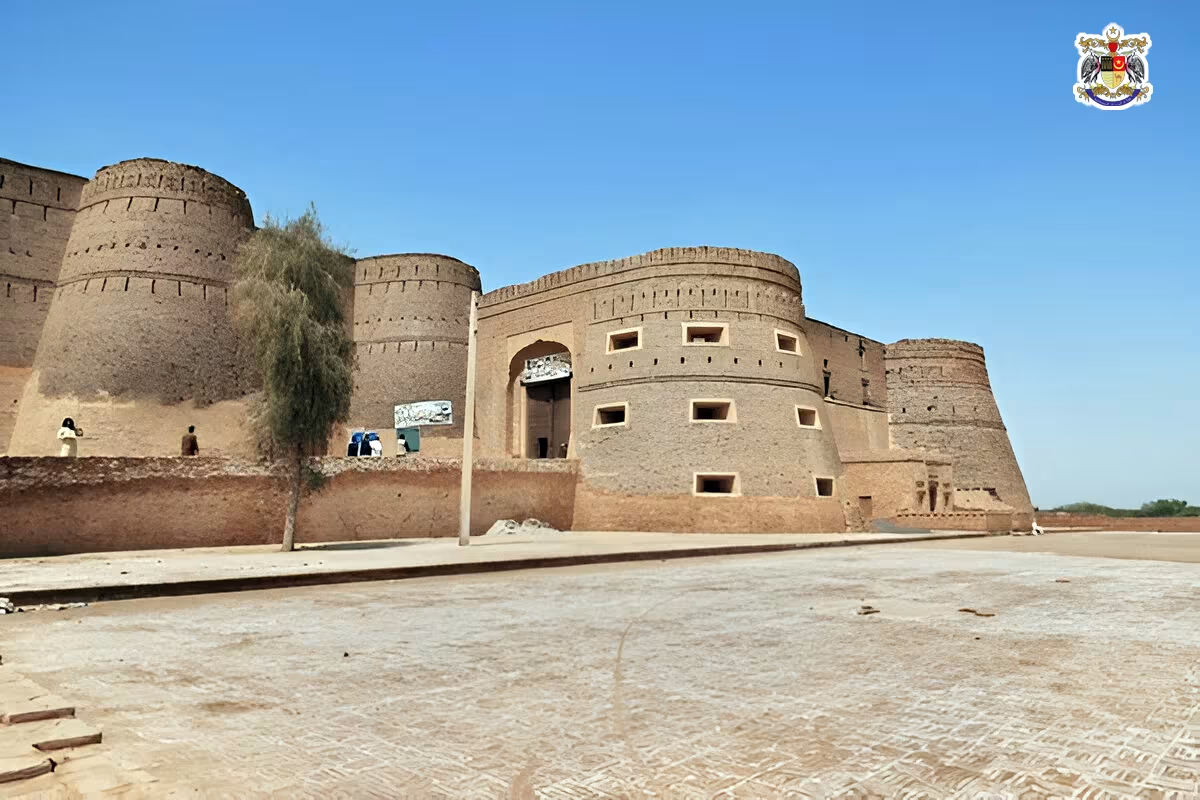
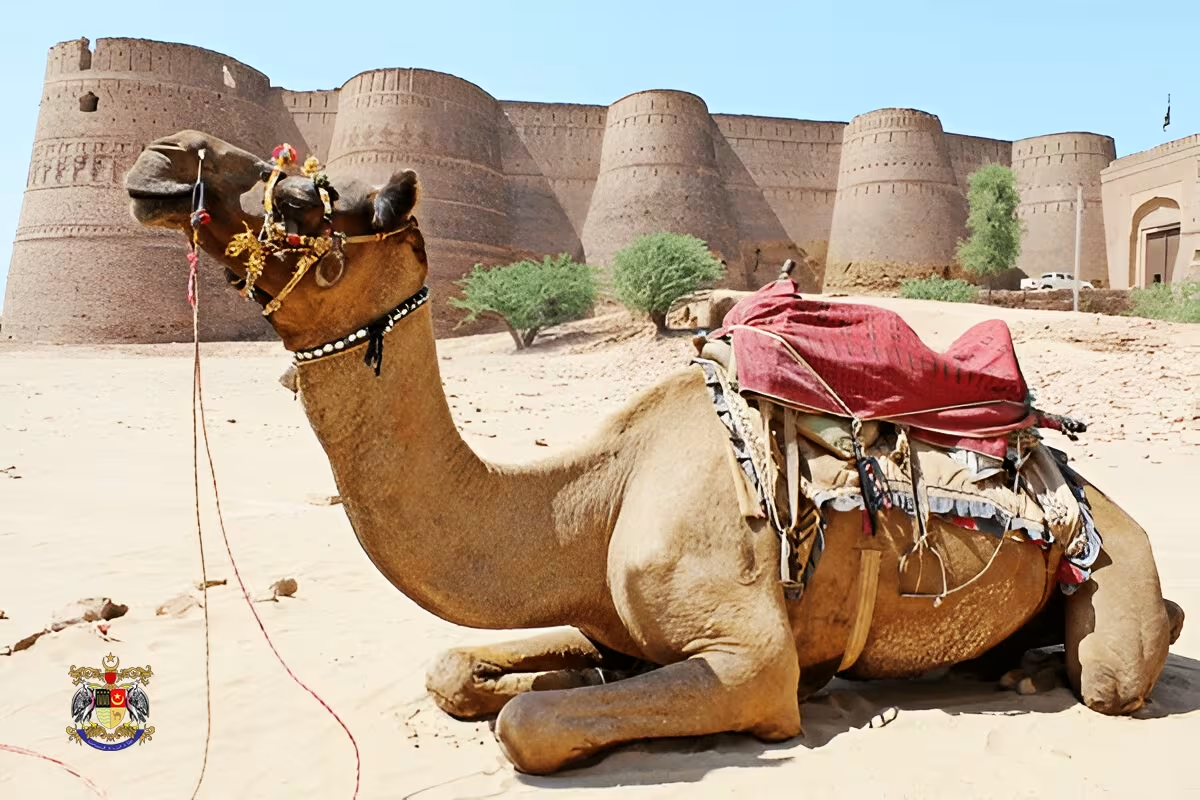
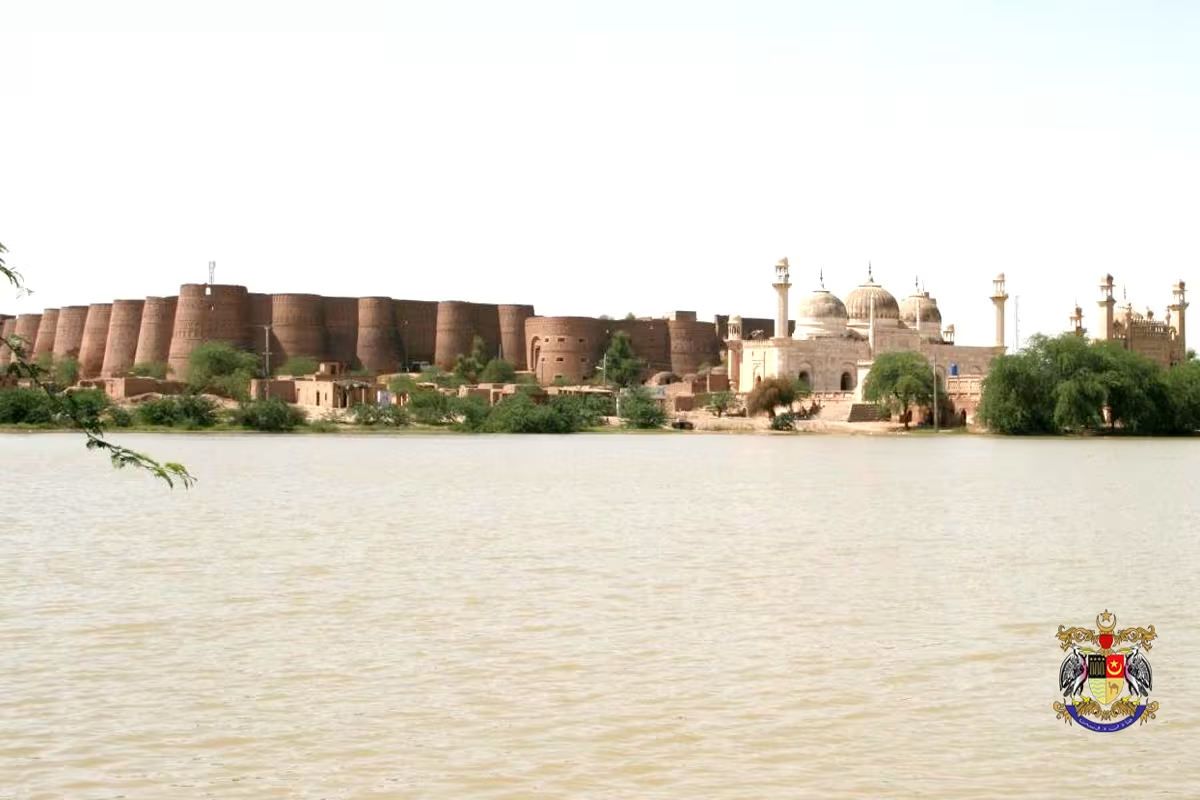
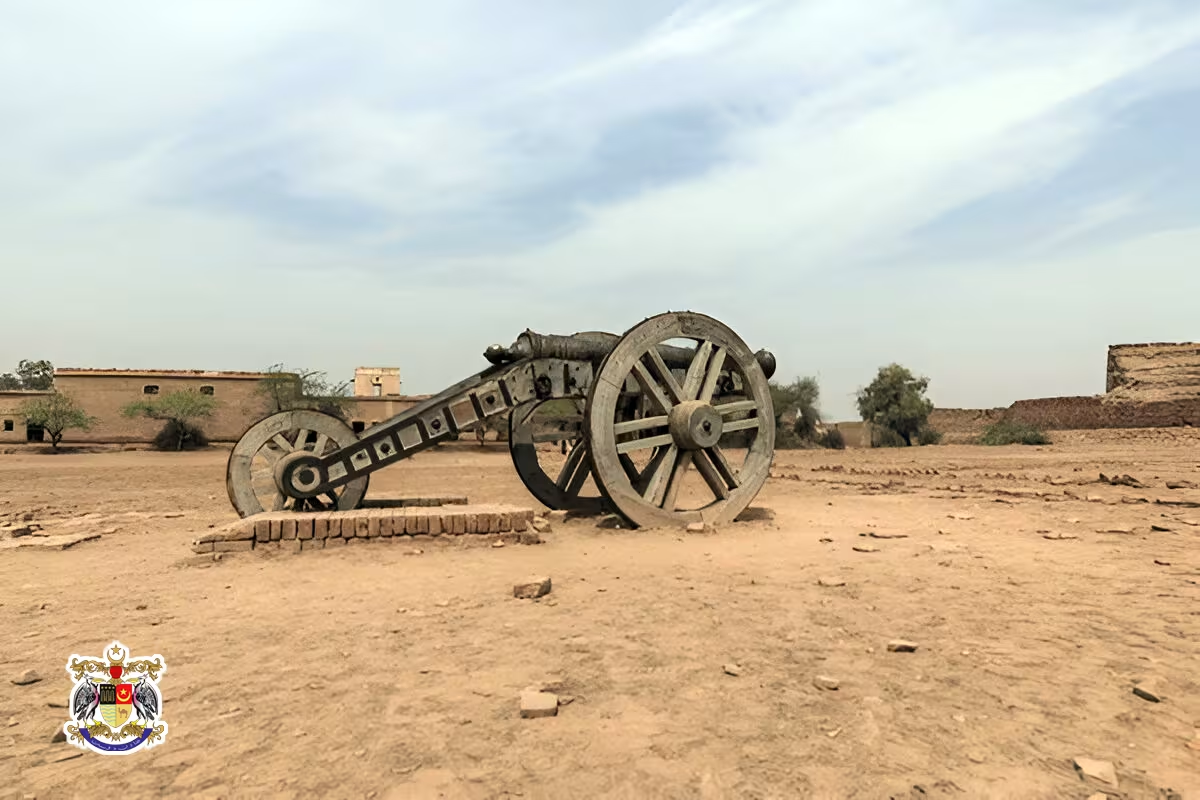
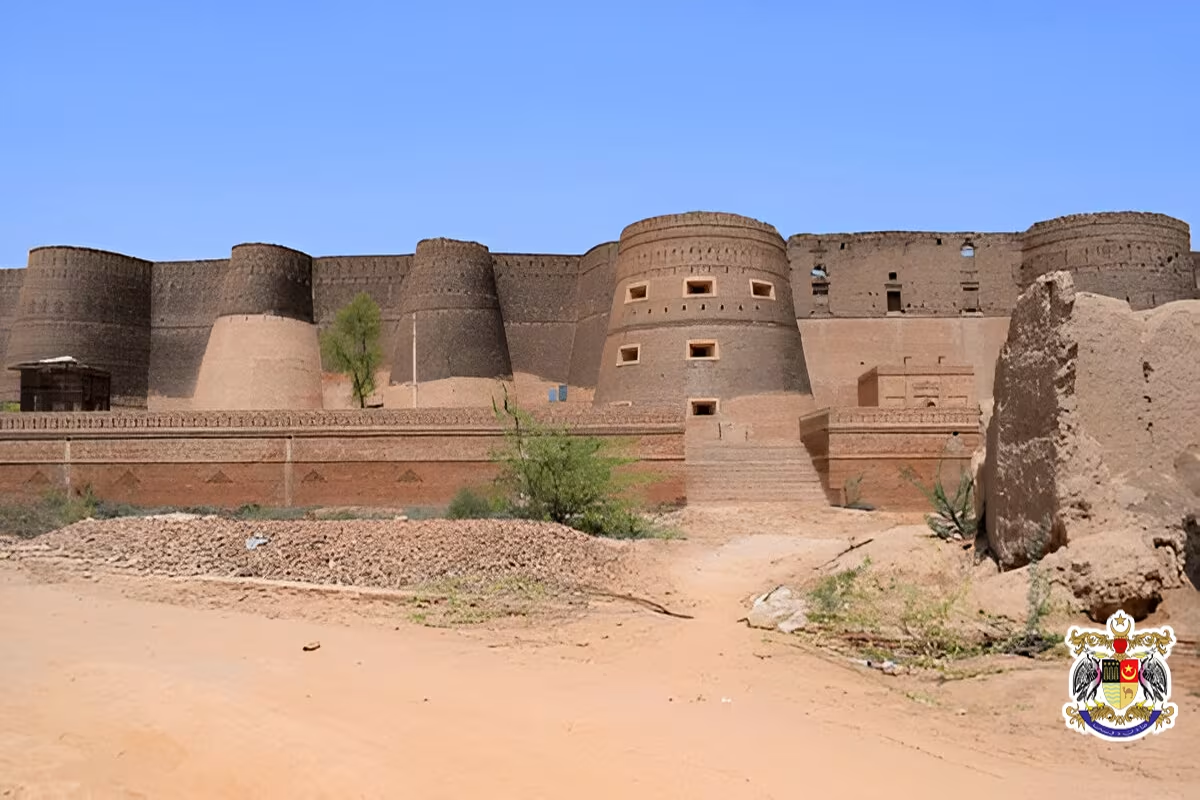
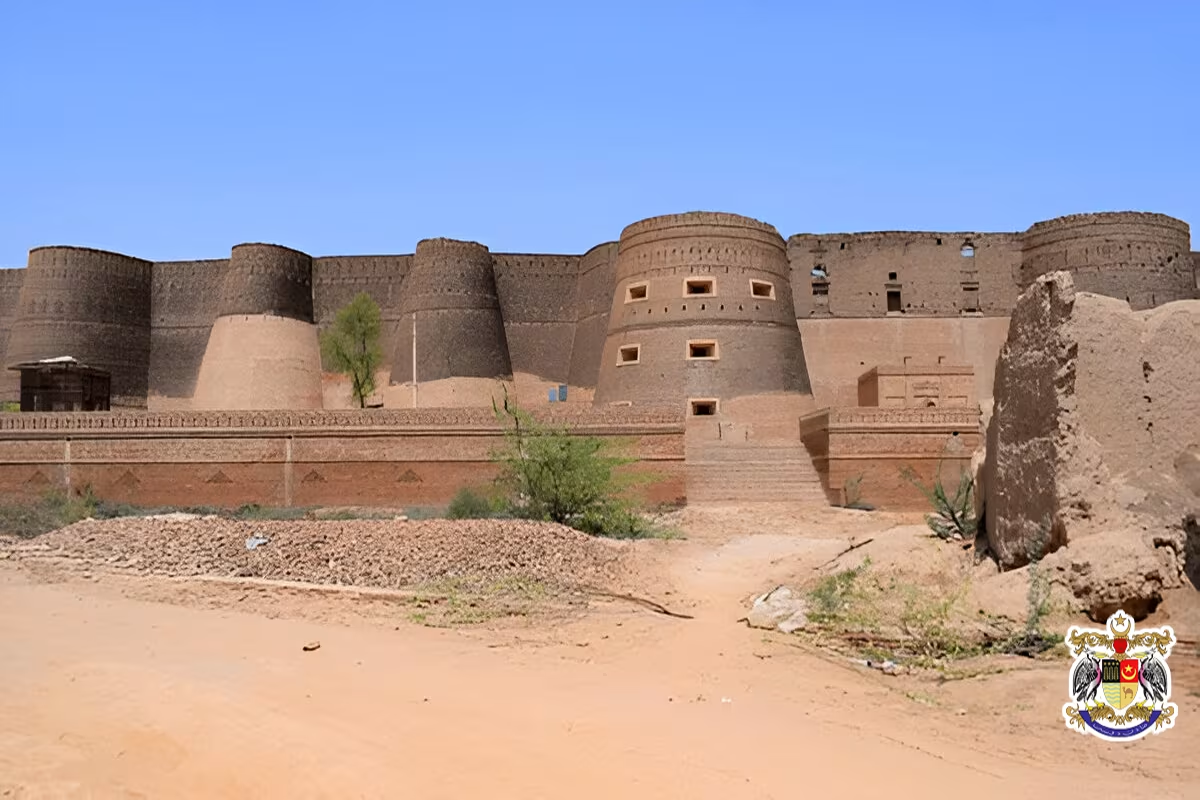
The fort is a massive square clay‑brick structure with a perimeter of ~1500 m and walls up to 30 m high, constructed of baked bricks in symmetrical layout.
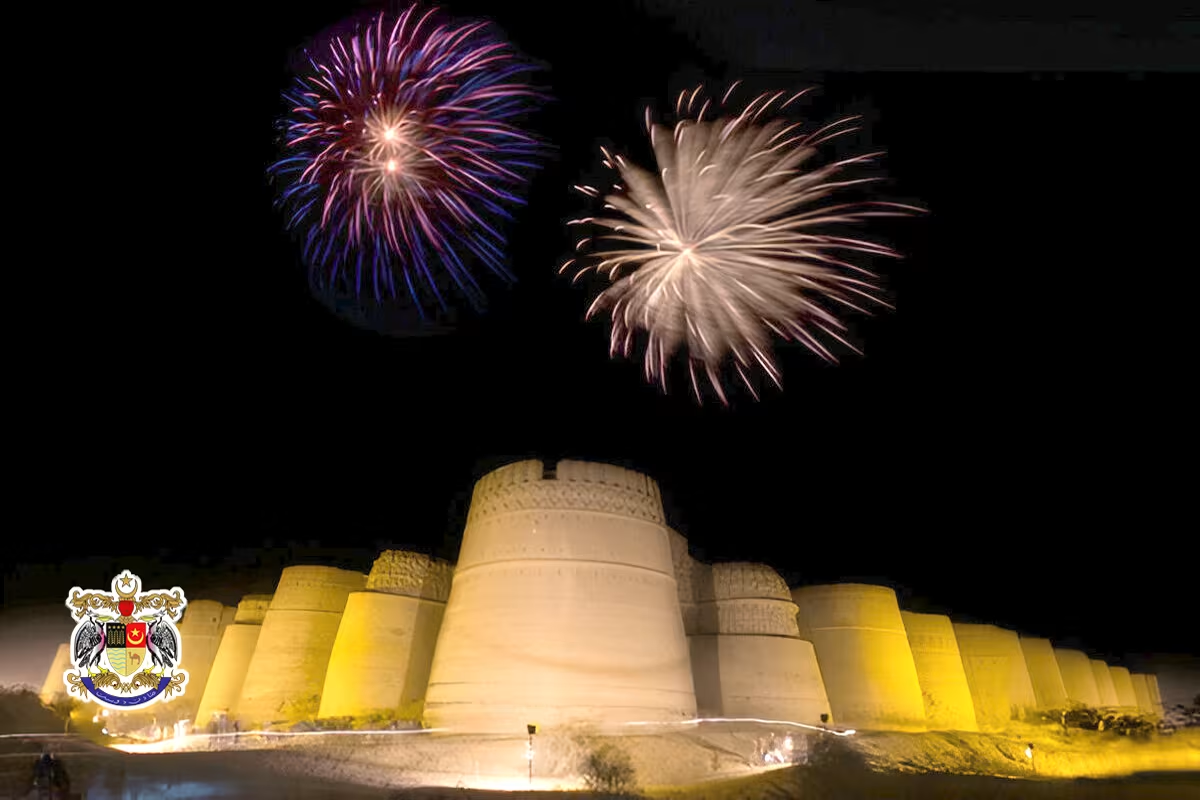
Surrounding it are 40 circular bastions—ten per side—visible from great distances across the desert sands, giving the appearance of a fortress guarded by giants.
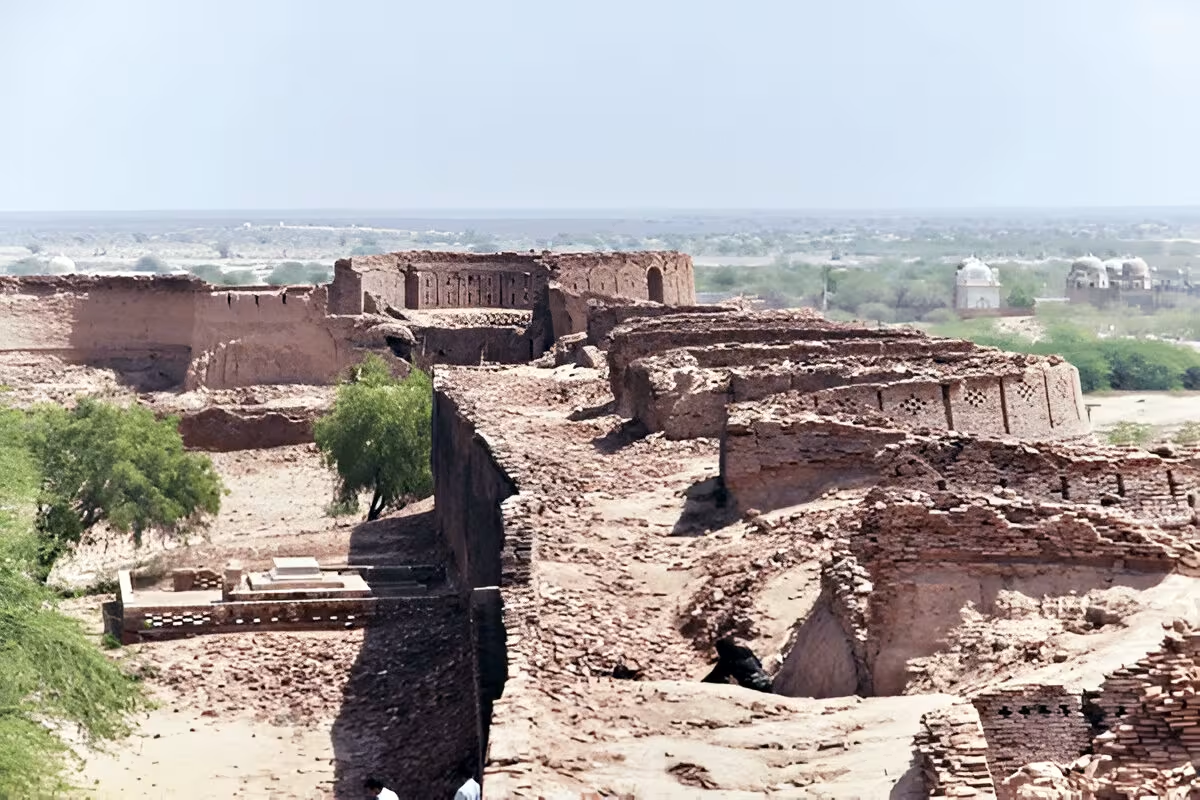
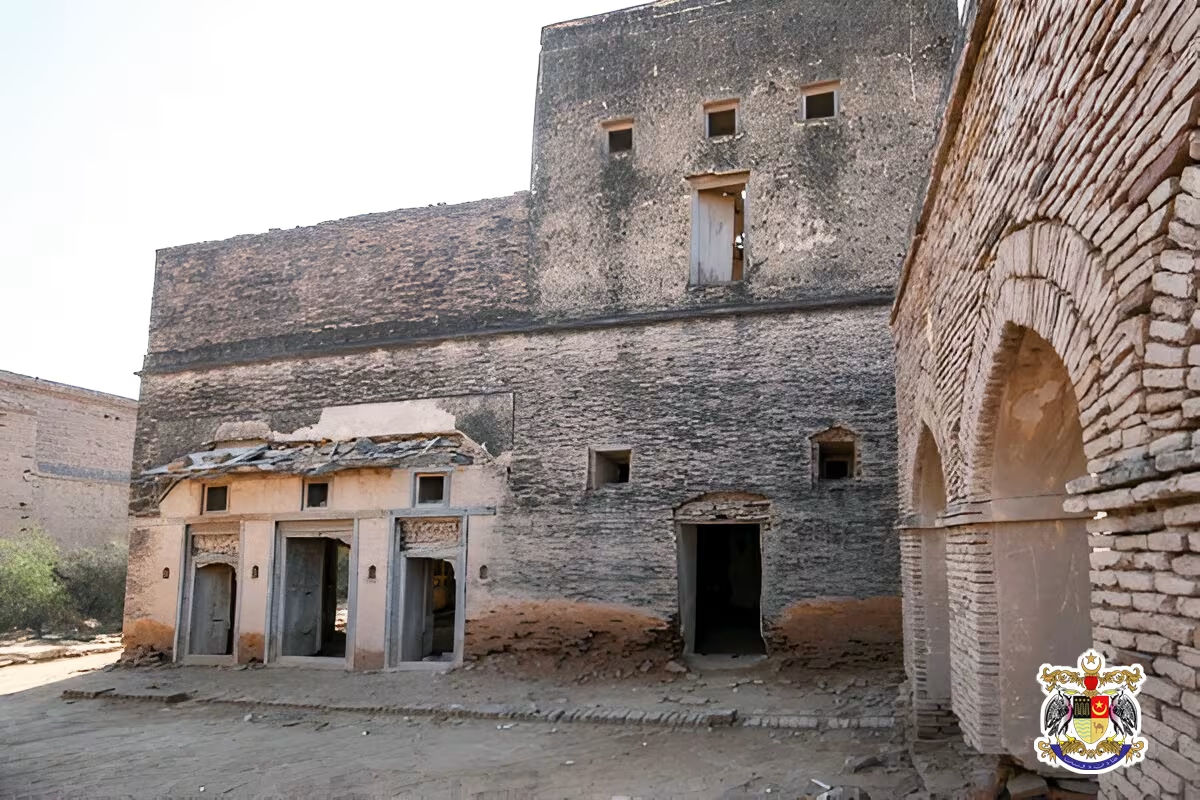
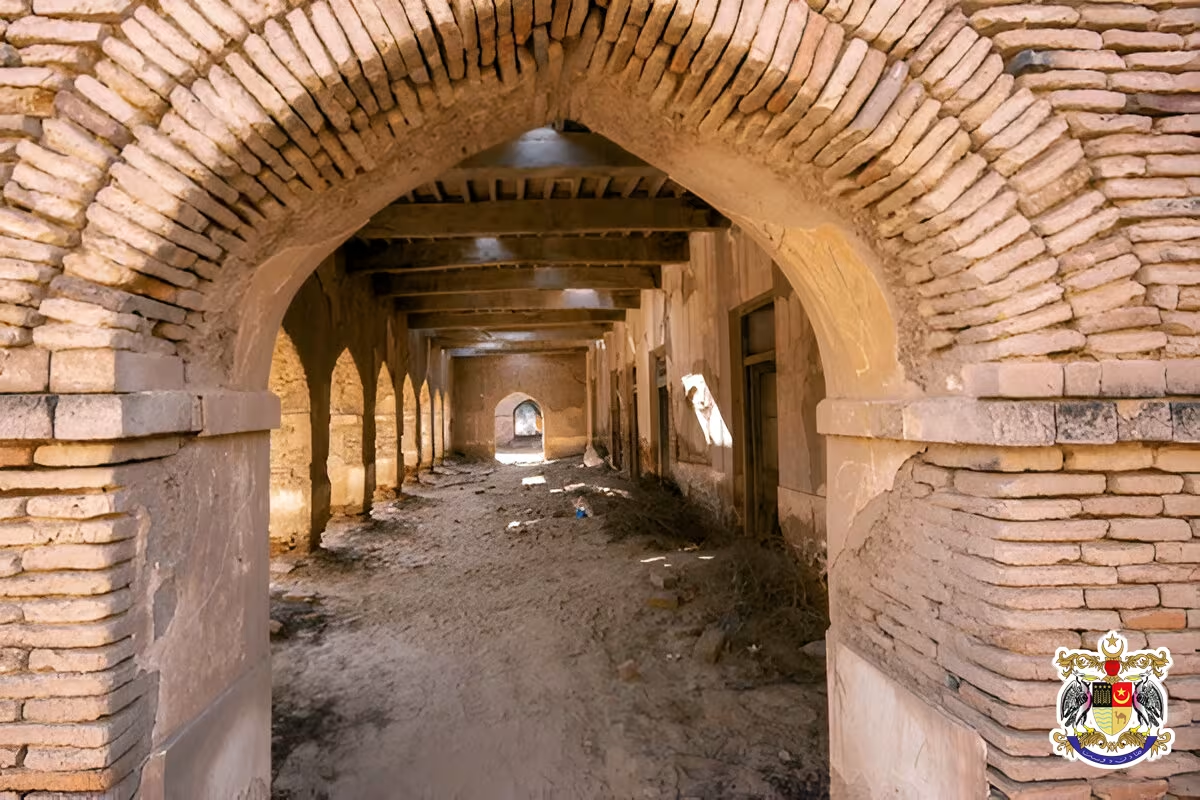
Inside, remnants of buildings, frescoes, tile work, a mosque and other structures speak to the fort’s grandeur; although much has deteriorated over time.
Abbasi Mosque (Jamia Masjid‑e‑Abbasi):
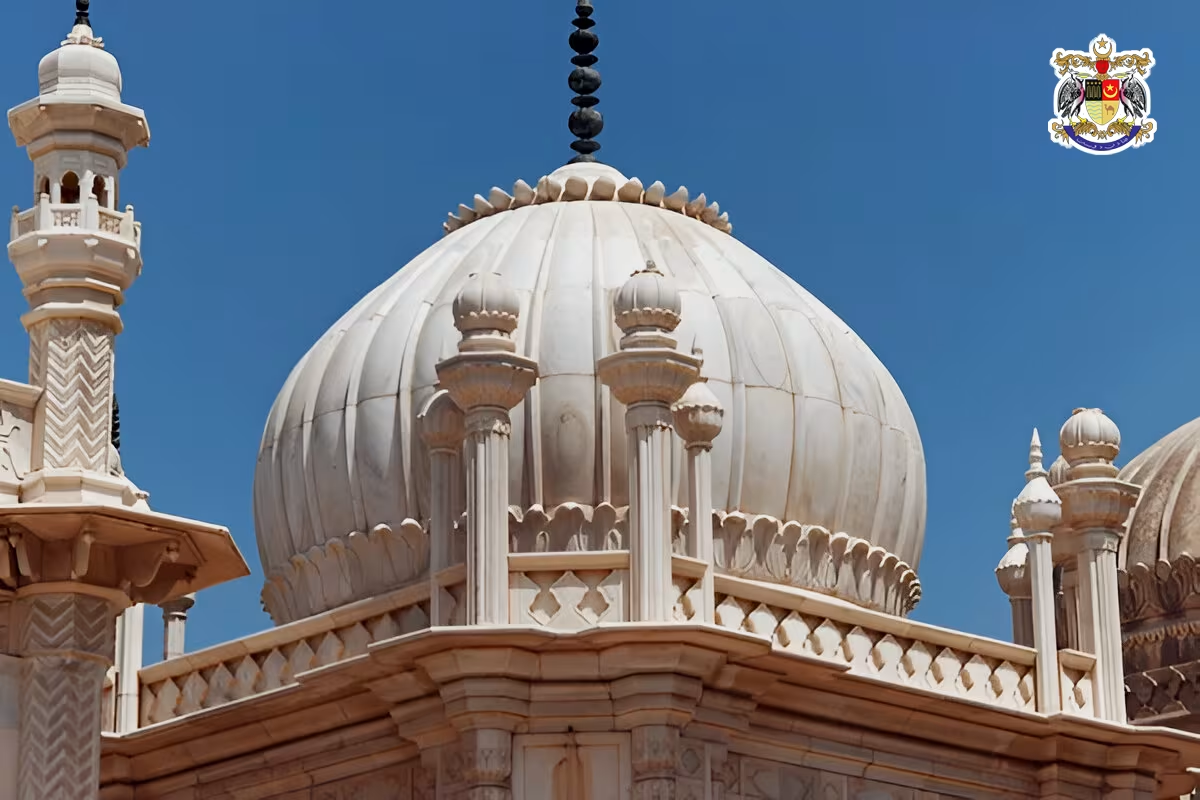
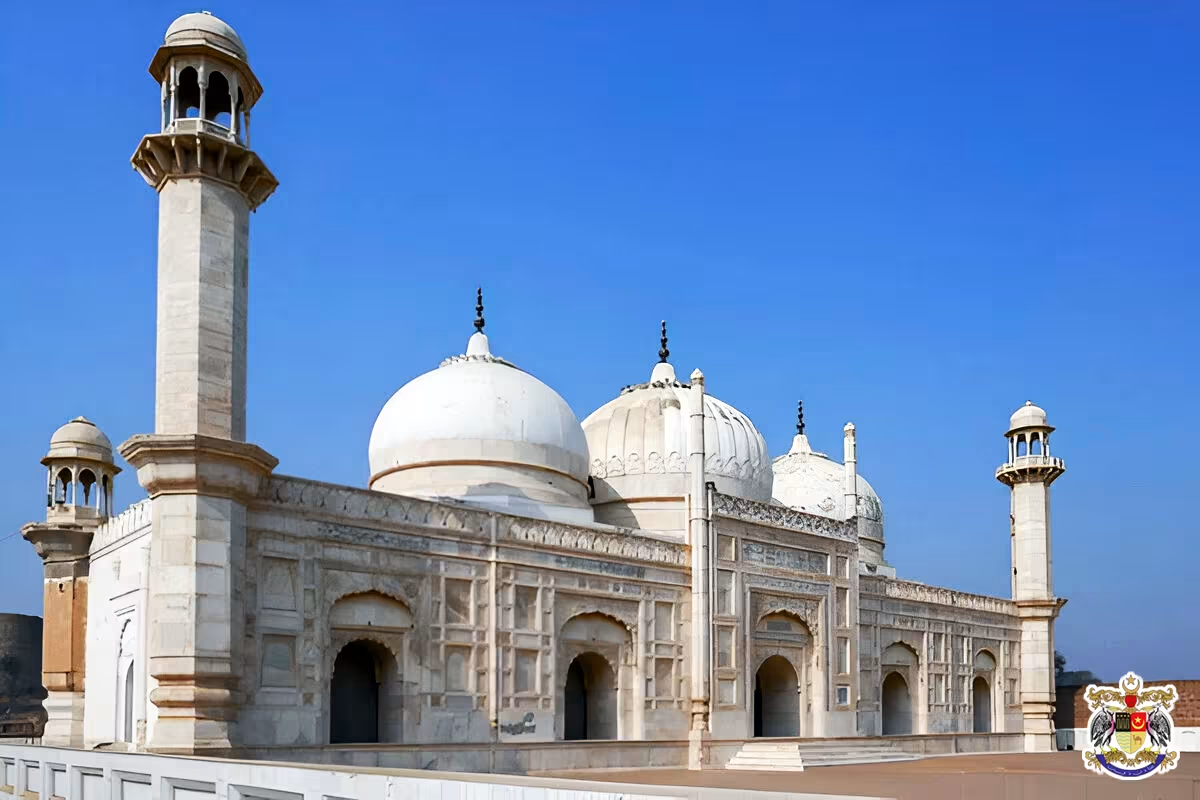
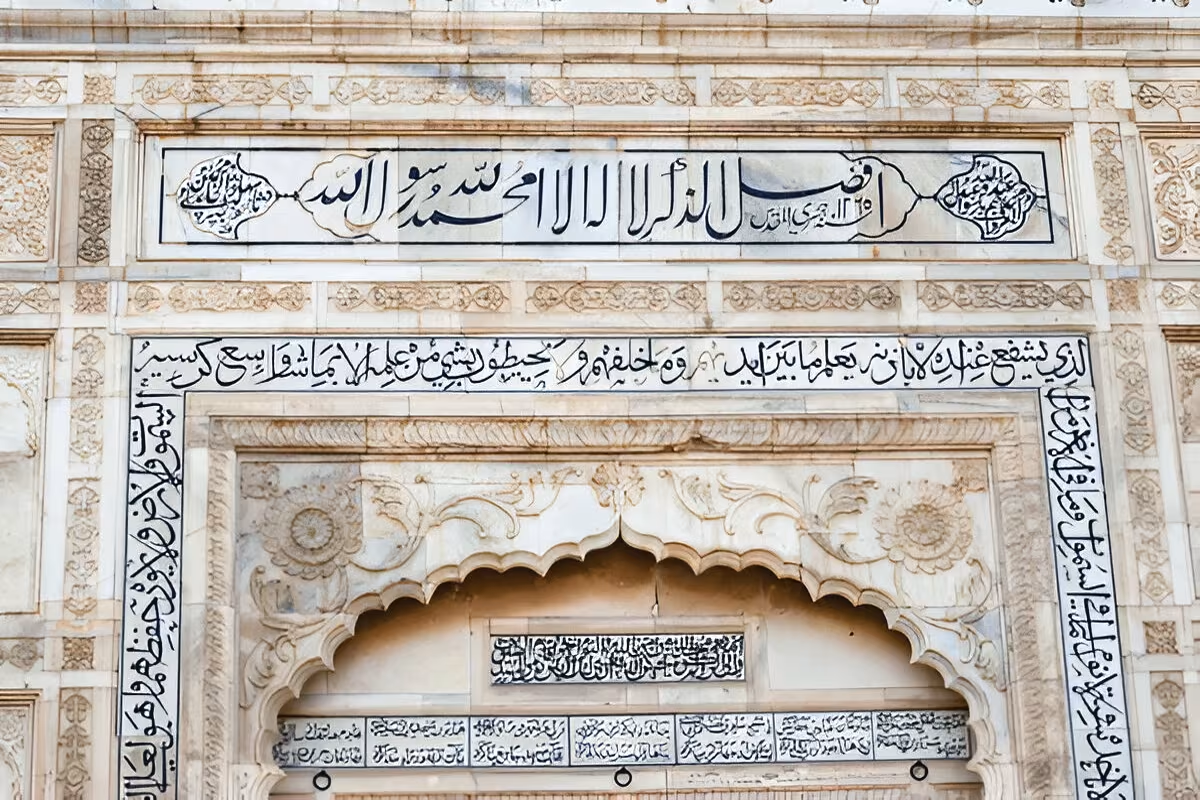
Just outside the fort lies the Abbasi Mosque, built in 1849 by Nawab Bahawal Khan. It is modeled on Delhi’s Moti Masjid, with white marble domes, carved façade, and capacity of 10,000 worshippers.
Derawar Fort Events Cholistan Jeep Rally Heritage Tours

Cholistan Jeep Rally:
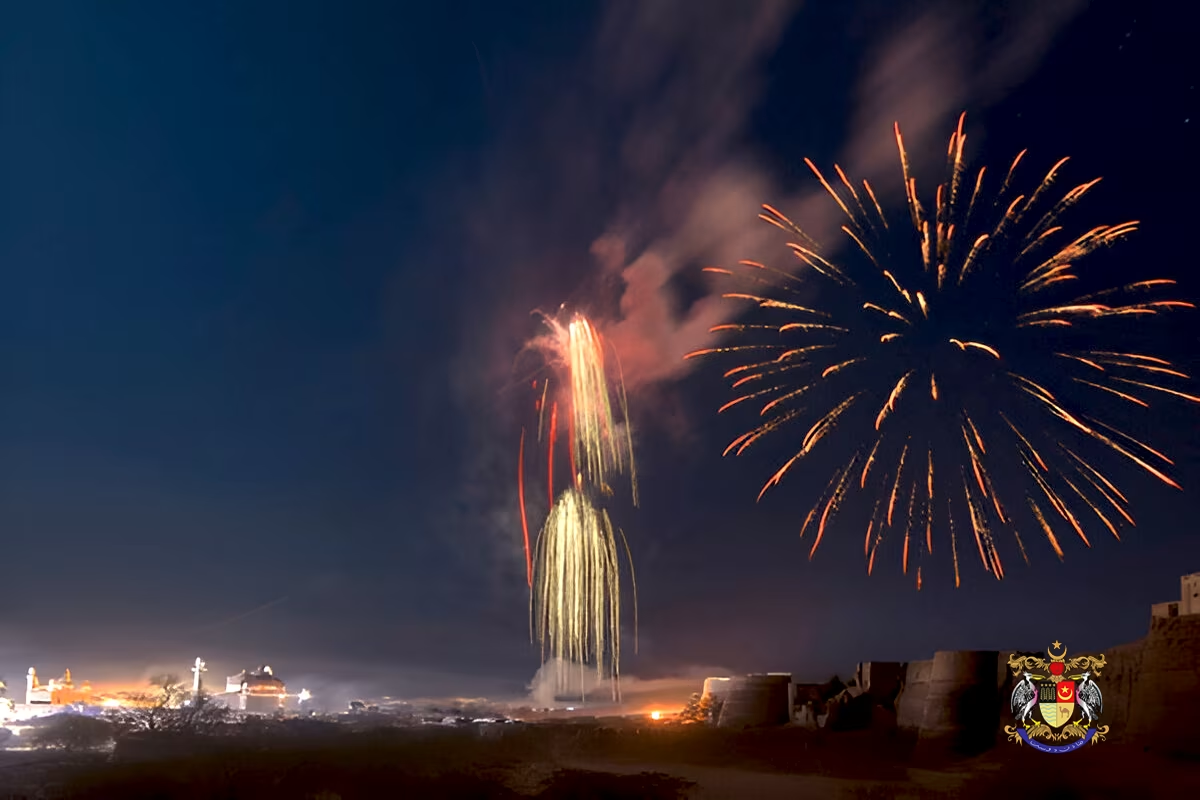
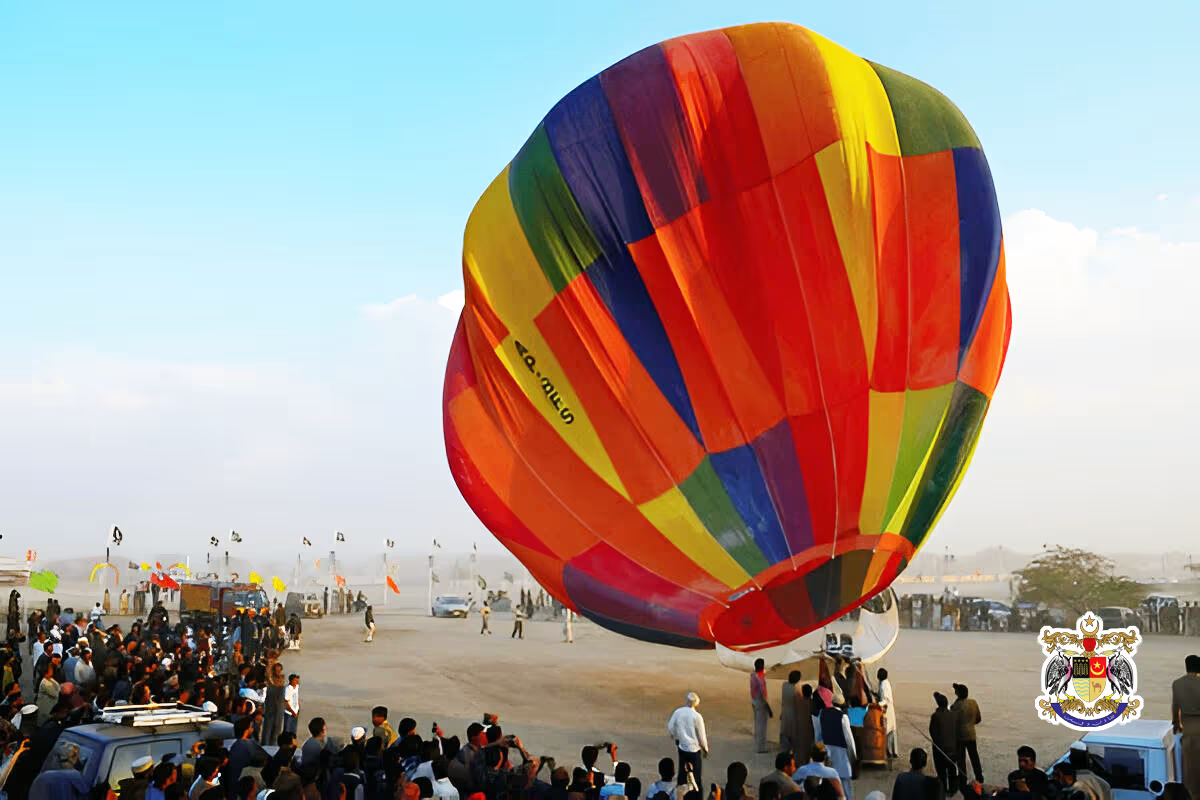
Every year, the Cholistan Jeep Rally—a major motorsport festival—takes place in the desert near Derawar, drawing tens of thousands of participants nationally and internationally (~70,000 visitors).
Judicial Open Court (Historical tradition):
In the fort’s history, it was said that Nawab Sadeq Muhammad Khan I held an open court every Thursday, dealing with all kinds of legal cases, even capital matters, in an open-air assembly inside the fort.
How to reach Derawar Fort from Bahawalpur
Getting There:
- Starting point: Bahawalpur City or Ahmedpur East (Dera Nawab Sahib).
- Distance: Approximately 95 km from Bahawalpur, 45 km from Ahmedpur East via Ahmedpur‑Derawar road.
- Recommended to use a 4WD vehicle, as desert terrain can be challenging; journey takes 3–4 hours depending on road condition.
Permission Requirements:
- The fort remains under the private ownership of the Bahawalpur royal family, so prior written permission from the current Nawab of Bahawalpur is required to enter both the fort and the royal graveyard nearby.
Visitor Precautions When Visiting Derawar Fort
Weather & Timing:
- Best season to visit: Winter months (October–March), when the desert is cooler. Summer is extremely hot and harsh in the Cholistan Desert.
Safety & Preservation:
- The interior of the fort has deteriorated significantly—collapsed stairs, missing roofs, termite‑eaten woodwork, and unstable bastions. Visitors should stay clear of unsafe areas.
- Avoid walking on fragile ruins. It is forbidden to litter or damage structures—both to preserve heritage and ensure personal safety.
Health & Supplies:
- Carry water, food, sun protection (hats, sunscreen), and first‑aid—shops near the fort are minimal or nonexistent; better to bring supplies in advance.
Visitor Facilities at Derawar Fort Bahawalpur
- Minimal official visitor infrastructure exists inside the fort—no visitor center, cafés, or washrooms; only a small shop or gatekeeper’s hut near the entrance, though even that is limited.
- Nearby the fort, the royal graveyard of the Nawabs can be visited, but entry also requires special permission.
- Guides and local watchmen (such as those employed by the Nawab’s family) sometimes offer paid tours or explanations for visitors.
- There are periodic announcements of restoration works and preservation, improving structural safety and possibly visitor amenities over time.
Restoration Derawar Fort & UNESCO Role
Preservation & Government Projects:
- In 2017–2018, the Punjab Archaeology Department launched a preservation scheme allocating around Rs 140 million, followed by Rs 120 million in 2022‑23 toward conservation of the decaying internal secretariat building and bastions
- By April 2025, Rs 160 million had been spent on repairing bastions (especially the eastern side), the main gate, Baradari, internal Mosque, platforms, and adjacent buildings.
UNESCO Tentative Listing:
- In April 2016, the Government of Pakistan submitted “Derawar and the Desert Forts of Cholistan” for inclusion on the UNESCO Tentative List, under criteria (iii) (cultural tradition) and (v) (interaction of human settlement and the environment).
- The listing recognizes Derawar as the best‑preserved example of desert forts that secured caravan and pilgrimage routes and water resources in a hostile arid environment across centuries.
Importance of UNESCO Engagement:
Cultural activists and local stakeholders have urged UNESCO to step in for deeper conservation, citing threats from neglect, weathering, and tourist damage.
Why Derawar Fort Matters: Heritage, Architecture & Tourism
Cultural and Historical Value:
- Derawar Fort is a rare survival of the desert fortress tradition stretching back to medieval trade networks and Rajput and Abbasi rule, making it invaluable for regional history and identity.
- Architecturally, its symmetrical proportion, massive bastions, and desert landscape fusion highlight ingenious adaptation to arid environment and defensive needs.
Tourism Potential:
- As the venue for the Cholistan Jeep Rally, the fort serves as a focal point for heritage tourism and desert adventure, grounding the event in local history and scenery.
- Enhancing facilities and preservation has potential to boost cultural tourism, generate local economic benefits, and spotlight Bahawalpur as a destination of global heritage significance.
Popular Sites to Visit Derawar Fort and District Bahawalpur
Royal Graveyard of the Nawabs near Derawar Fort
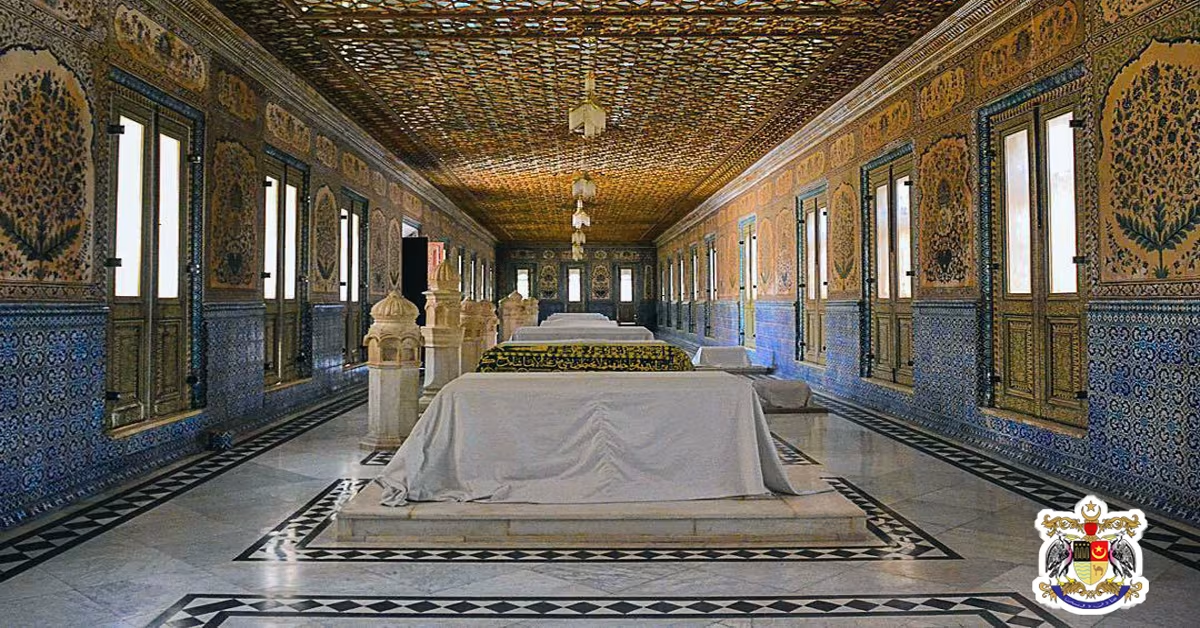
Just a stone’s throw from the mighty Derawar Fort lies the Royal Graveyard of the Abbasi Nawabs, an awe-inspiring necropolis where generations of Bahawalpur’s ruling family rest. This serene site houses around 120 intricately carved marble tombs, many adorned with floral patterns and fine Quranic calligraphy, reflecting the artistic zenith of Mughal and Persian influences. Not only does it tell the story of the Nawabs’ regal heritage, but it also offers insights into the evolving funerary architecture of South Punjab.
Visitors often remark on the peaceful yet solemn ambiance of the graveyard, with the towering bastions of Derawar standing as silent sentinels nearby. To explore these graves, prior permission is required from the Amir of Bahawalpur, safeguarding both respect and preservation of this historical sanctuary. Including this site on your Derawar Fort itinerary ensures a richer understanding of the area’s royal past.
Abbasi Mosque: A Marble Gem Beside Derawar Fort
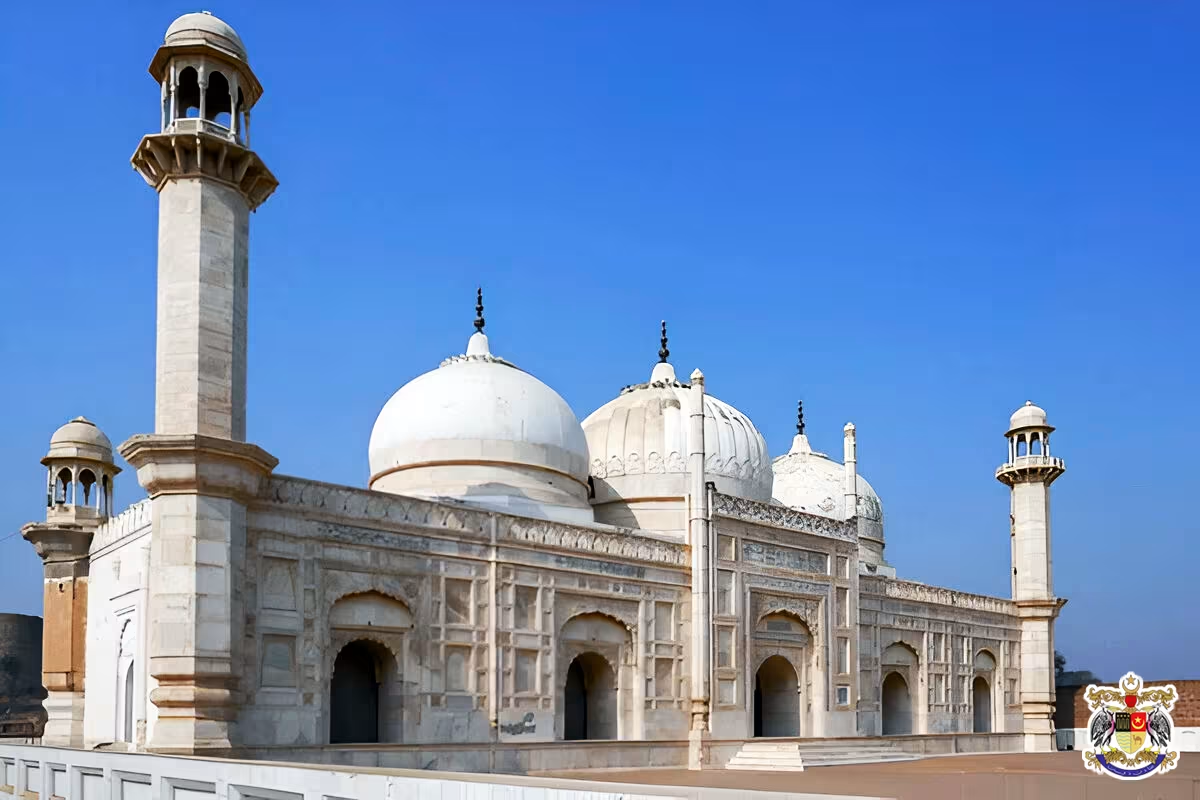
Adjacent to Derawar Fort, the striking Abbasi Mosque, also called Jamia Masjid-e-Abbasi, stands like a mirage of white marble against the golden sands of Cholistan. Built in 1849 by Nawab Bahawal Khan, it closely mirrors Delhi’s Moti Masjid in its architectural grace, boasting three large domes, scalloped archways, and a prayer hall that can host thousands. Travelers are often mesmerized by its finely chiseled marble and the peaceful courtyard that provides a moment of cool refuge from the desert sun.
The mosque remains functional, serving local villagers and visitors alike. A visit here not only complements your Derawar Fort tour but also provides a unique opportunity for cultural reflection and quiet prayer. This hidden gem is among the most beautiful mosques in Punjab, blending spirituality with history.
Uch Sharif: Sufi Shrines & Blue Mosaic Marvels Near Bahawalpur
Located roughly 75 km from Bahawalpur city, the ancient town of Uch Sharif is a treasure trove for those enchanted by Sufi heritage and medieval Islamic architecture. Once a thriving center of Islamic scholarship and mysticism, Uch is renowned for its spectacular shrines, such as the Tomb of Bibi Jawindi, Sheikh Jalaluddin Bukhari, and Hazrat Jalaluddin Surkh-Posh Bukhari.
These mausoleums, some over 700 years old, are adorned with intricate blue tile mosaics and geometric designs that rival the famed tilework of Multan. Although many structures have been partially damaged by floods and time, their faded grandeur continues to draw photographers, historians, and spiritual seekers from around the globe. Combining a day trip to Uch Sharif with your Derawar Fort exploration enriches your journey through southern Punjab’s layered Islamic and Sufi history.
Noor Mahal Bahawalpur: A Royal Italianate Palace
If you’re traveling to Derawar via Bahawalpur city, a stop at the magnificent Noor Mahal is a must. Constructed in 1875 by Nawab Sadiq Muhammad Khan IV, this palace seamlessly merges Italian architectural styles with local craftsmanship. Featuring grand verandahs, ornate balconies, and opulent halls filled with vintage chandeliers and Victorian furniture, Noor Mahal offers a glimpse into the lavish lifestyle of the Bahawalpur royals.
Today, it operates as a museum under the Pakistan Army, showcasing family portraits, period weapons, and regal memorabilia. Lit up spectacularly at night, Noor Mahal provides a striking contrast to the rugged desert fort of Derawar, giving visitors a complete picture of Bahawalpur’s dual identity—luxurious urban palace and remote desert stronghold.
Lal Suhanra National Park: Wildlife & Wetlands in the Desert’s Shadow
About 35 km east of Bahawalpur, Lal Suhanra National Park is a haven for wildlife enthusiasts and eco-travelers. Recognized as a UNESCO Biosphere Reserve, the park spans over 650 km², blending desert landscapes with lush forest patches and shimmering lakes. Here, you can spot graceful chinkara deer, endangered blackbuck, wild boar, jackals, and a rich variety of migratory and resident birds. Jeep safaris and guided nature walks allow visitors to experience Cholistan’s biodiversity firsthand. Many tourists couple their Derawar Fort tour with a morning or evening wildlife excursion at Lal Suhanra, making for an adventure that weaves together history, nature, and conservation.
Other Desert Forts: The Lost Chain of Cholistan Strongholds
Beyond Derawar, the vast Cholistan was once dotted with around forty desert forts, strategically built along the dry Hakra river bed to protect caravan routes. Many have vanished, but some ruins still stand, whispering tales of bygone eras. Marot Fort, near the Indian border, features tumbled ramparts hinting at its Rajput past. Islamgarh Fort, partially swallowed by sand dunes, and Mojgarh Fort, with its crumbling bastions, are stark reminders of the relentless desert reclaiming its ground.
Exploring these sites, though requiring sturdy 4WD and local guides, offers a deeper adventure into the historical tapestry that Derawar Fort once anchored. For history buffs and off-the-beaten-path travelers, these forts transform the Cholistan into an open-air museum of forgotten kingdoms.
Derawar Fort Images